
Identifying Your Chanterelles

2.1
Wolly Chanterelle
Turbinellus floccosus, Gomphus floccosus
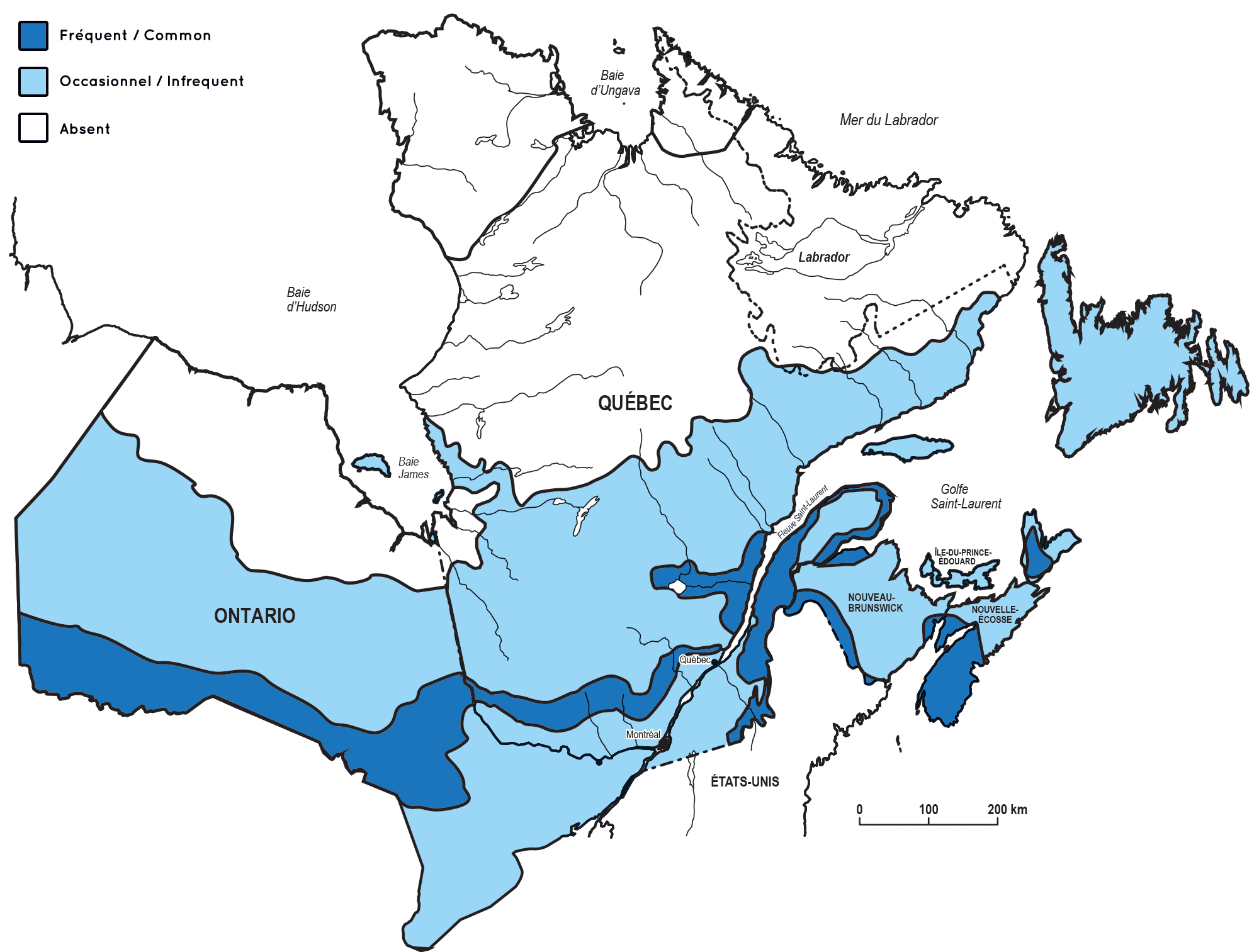
Frequency
Frequent


Habitat
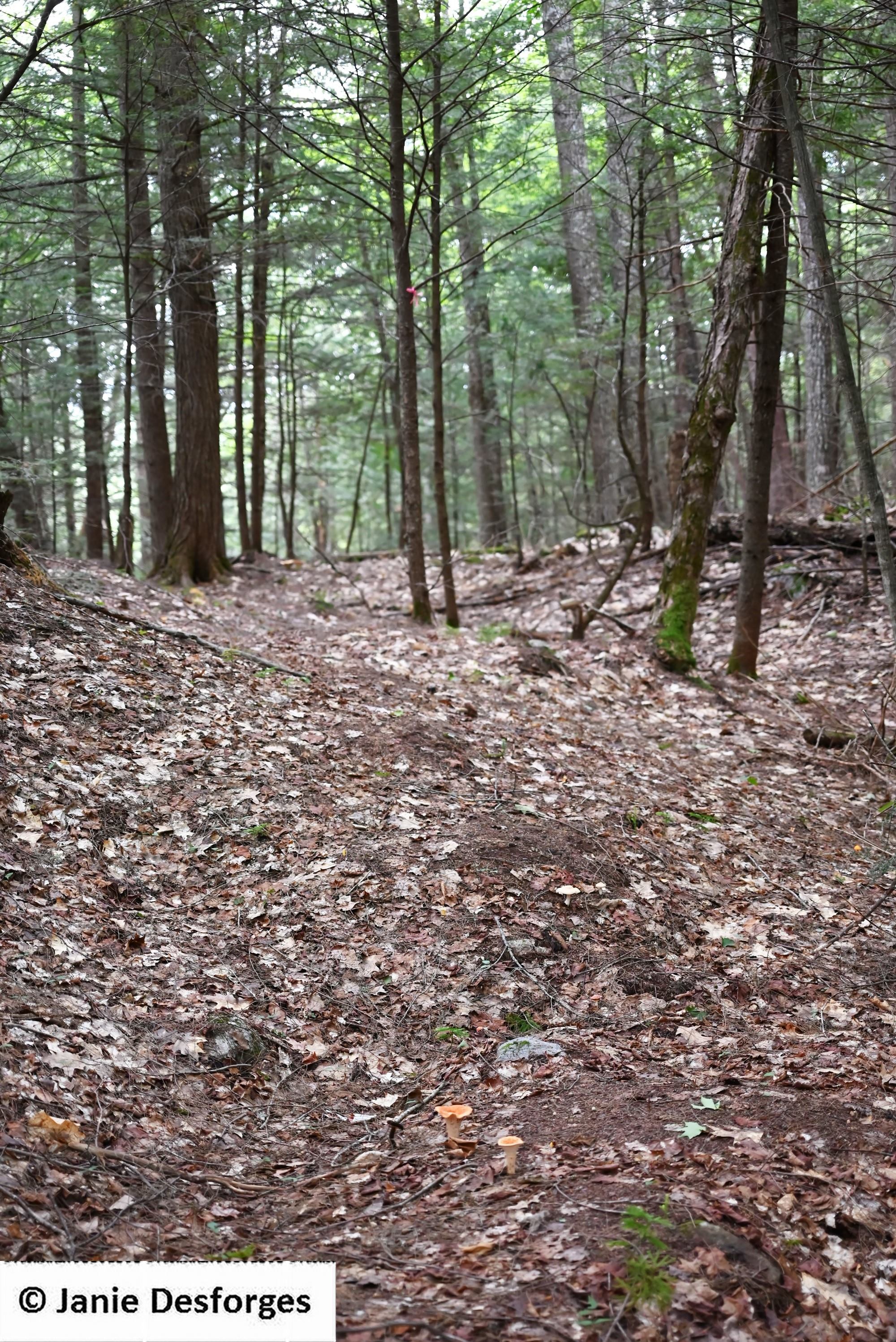
The Wolly Chanterelle fruits in summer, sometimes in early autumn, in forests where resinous trees are present.


Fruit body
It has no real look-alikes and can hardly be confused with another species.
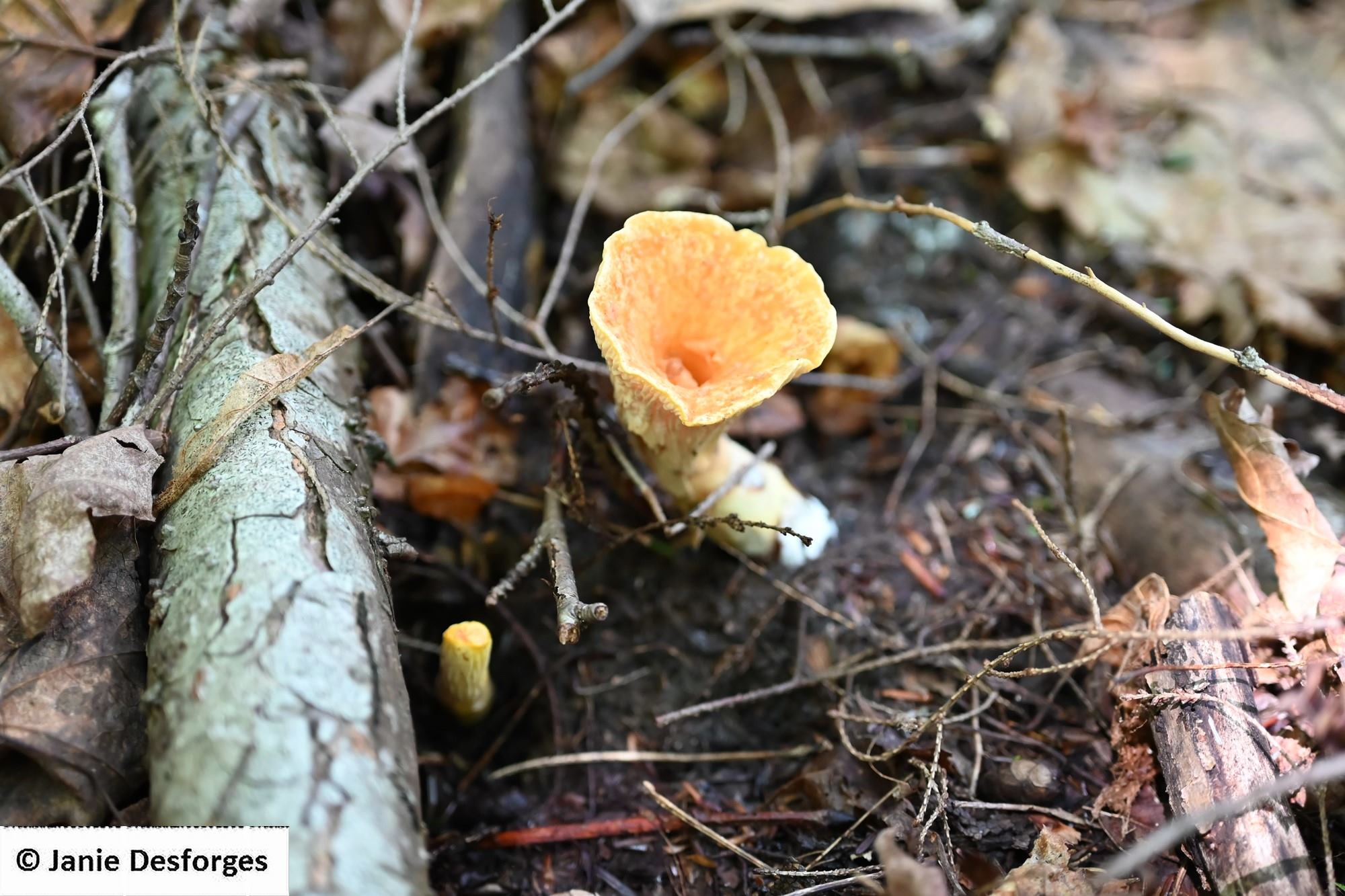
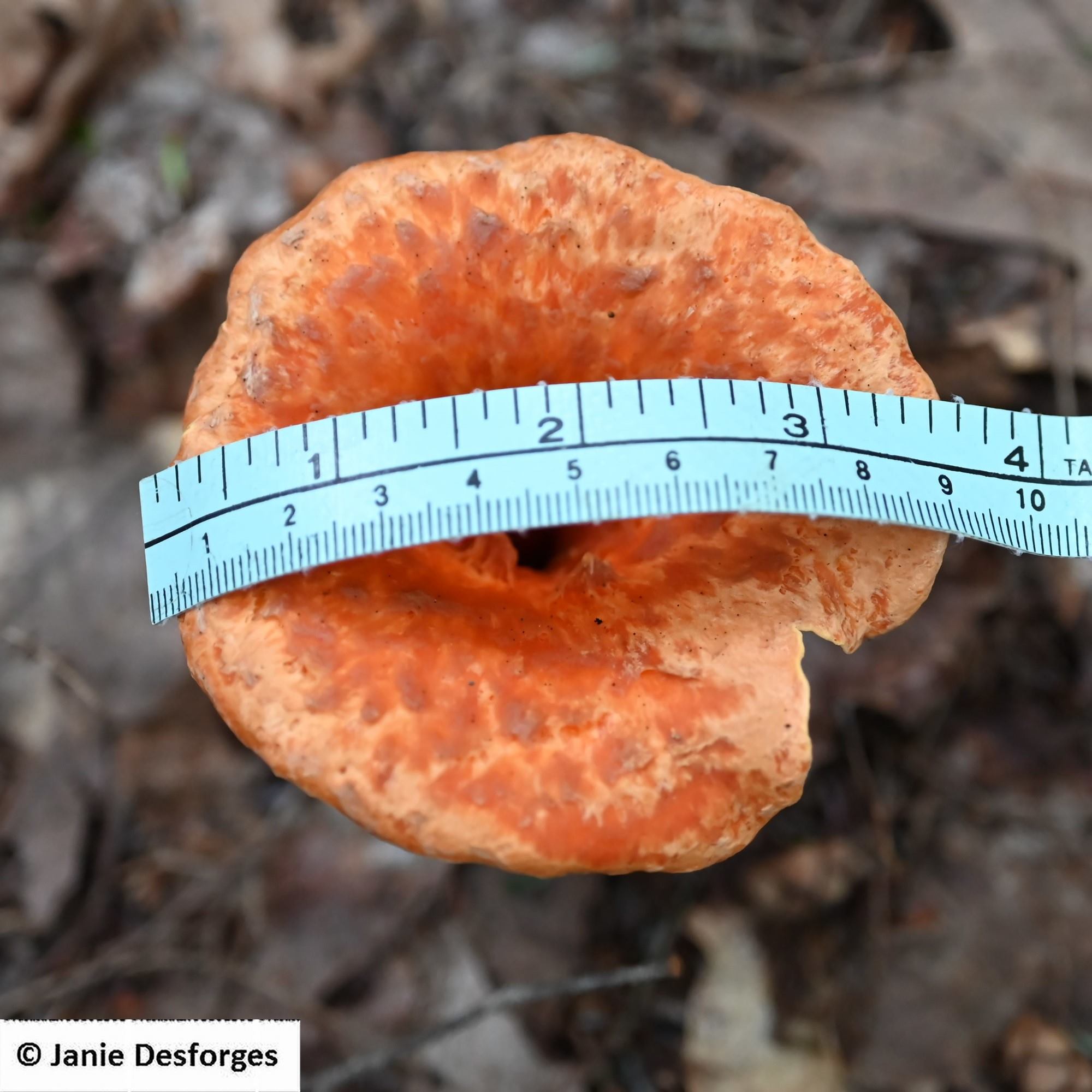
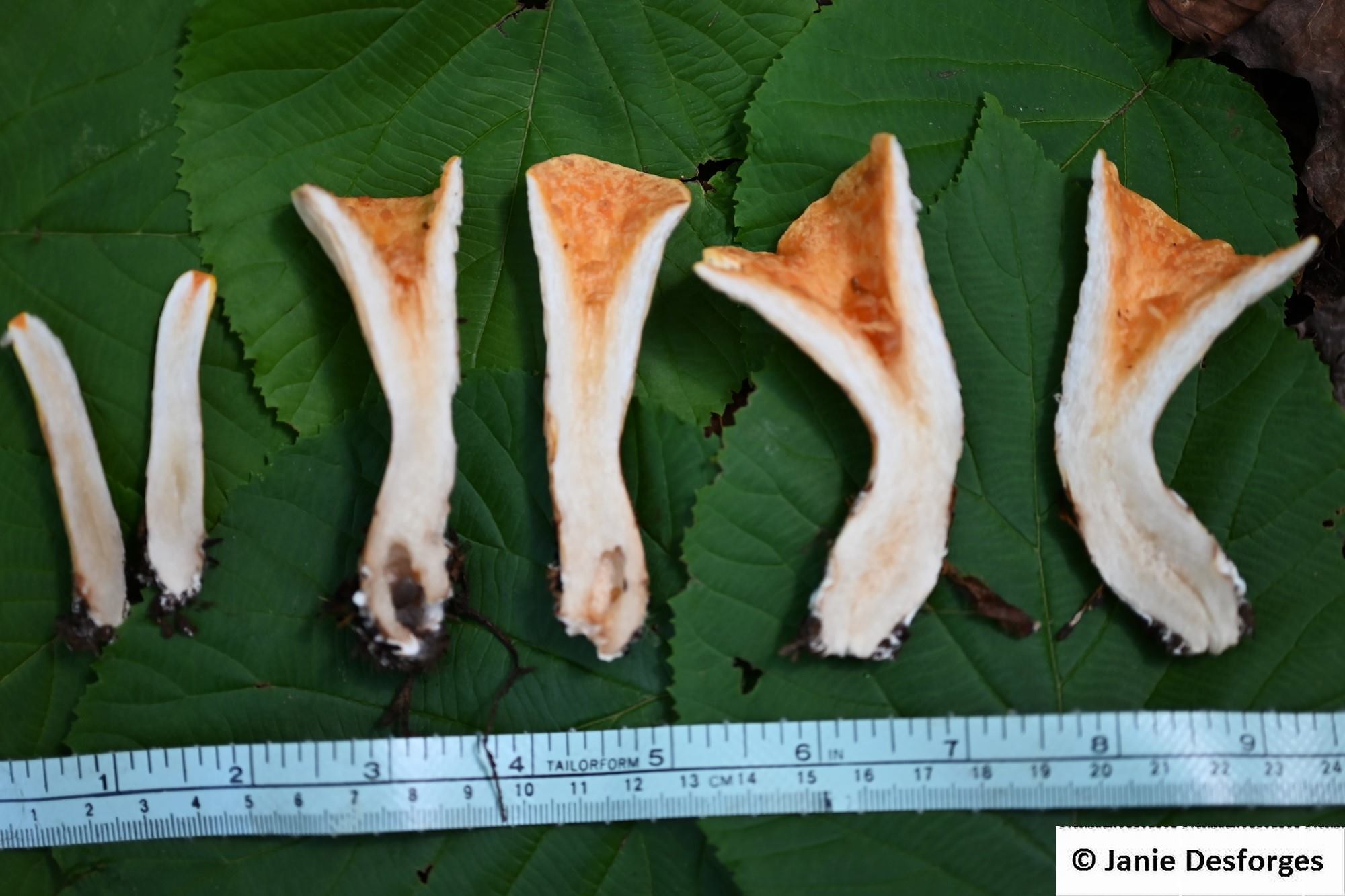
Initially cylindrical, the adult fruitbodies mature to trumpet or vase-shaped form, reaching up 6-14 (21) cm to 4-12 cm across.


Cap
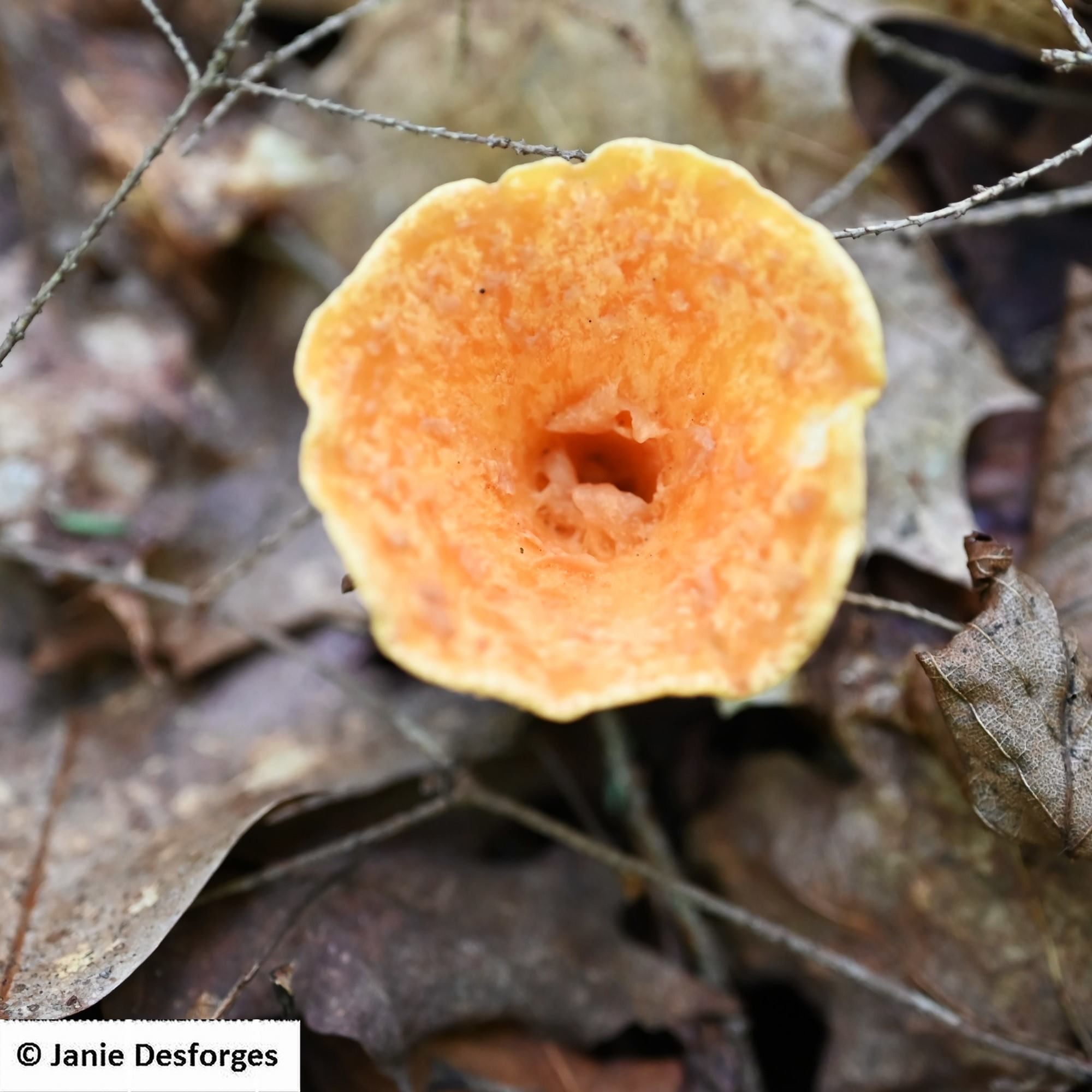
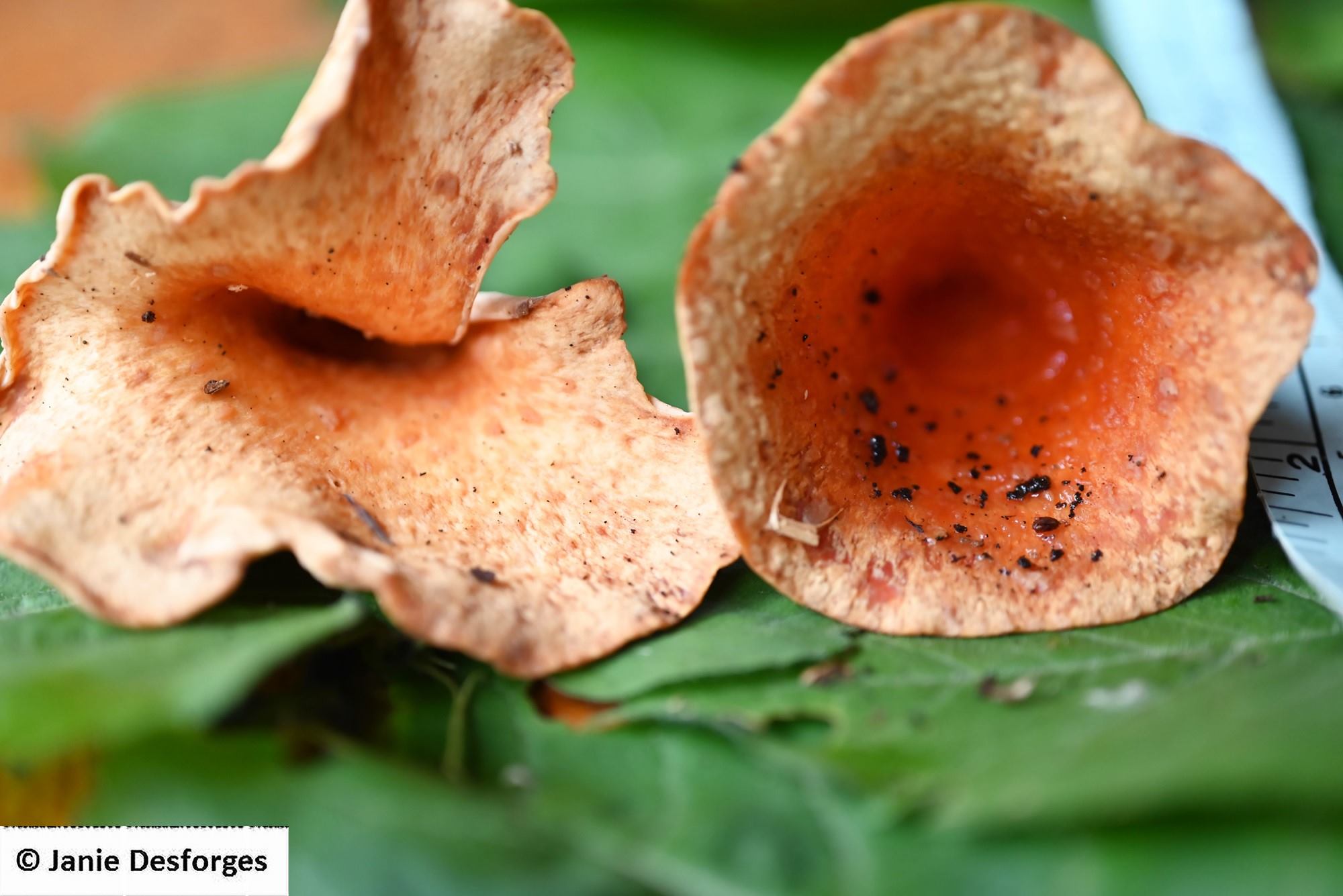
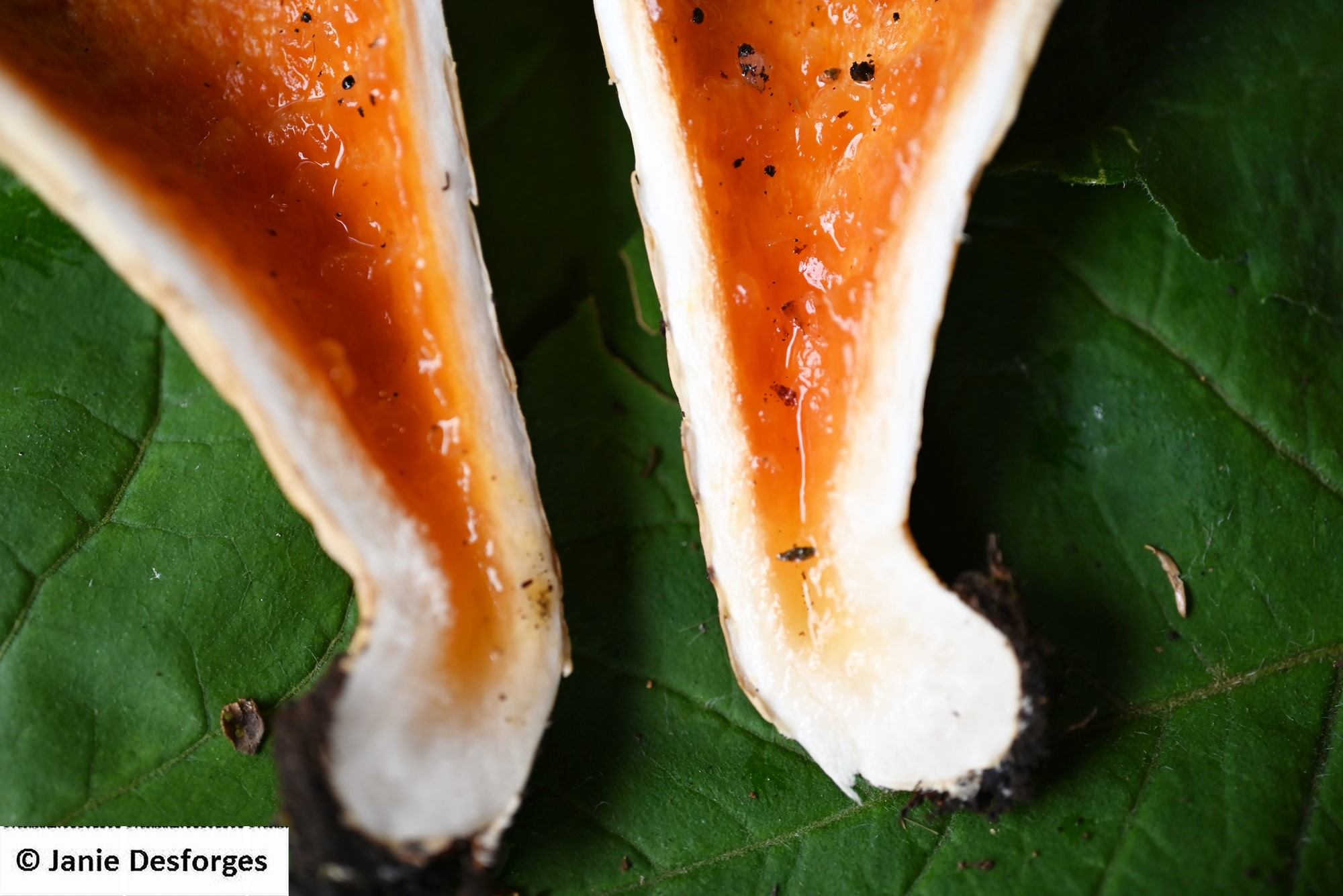
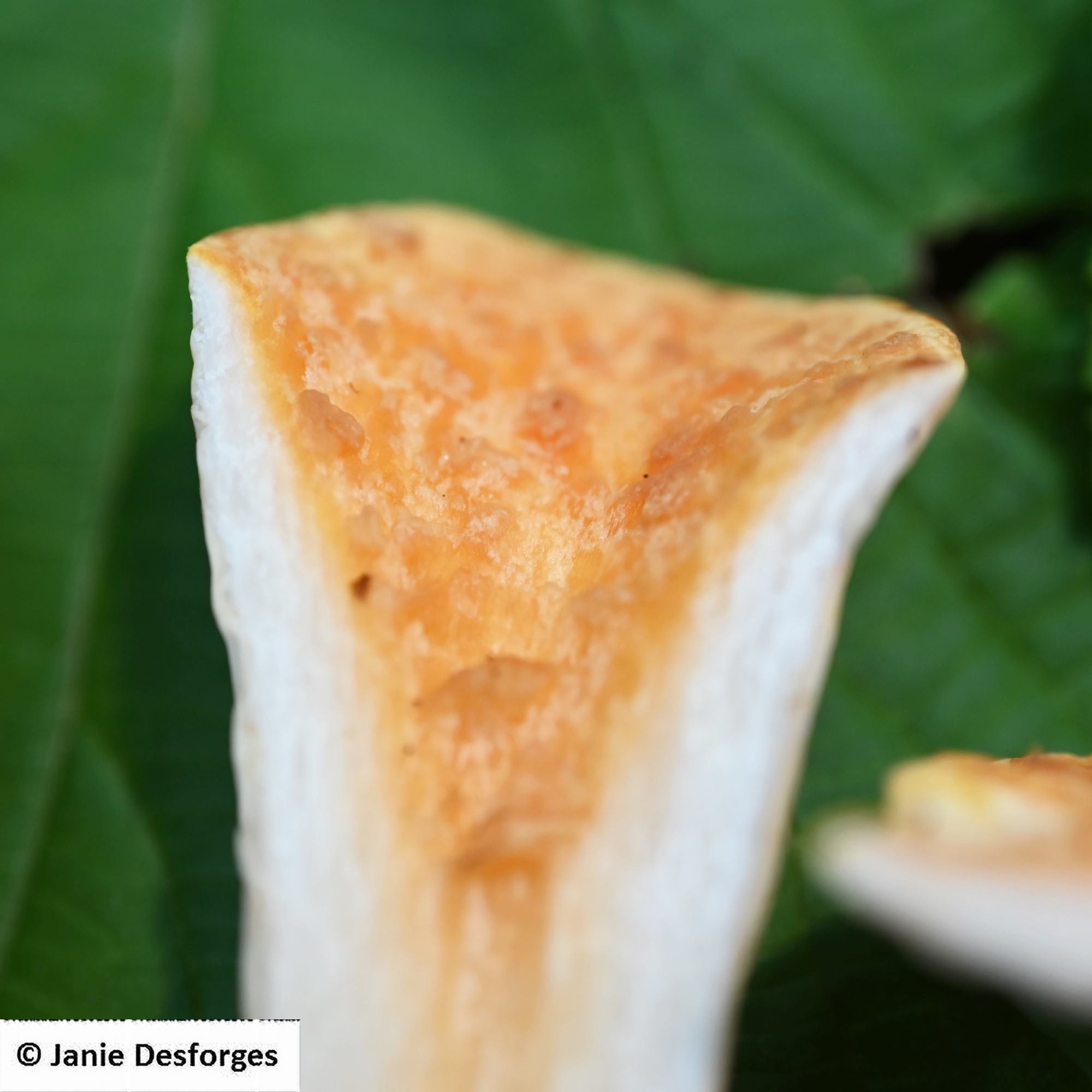
The cap surface is broken into scales, with the space beetwen more yellow and the scales themselves more orange,sometimes reddish. There is no clear demarcation between the cap and the stipe.


Margin
Thin and often weavy.


Hymenium surface
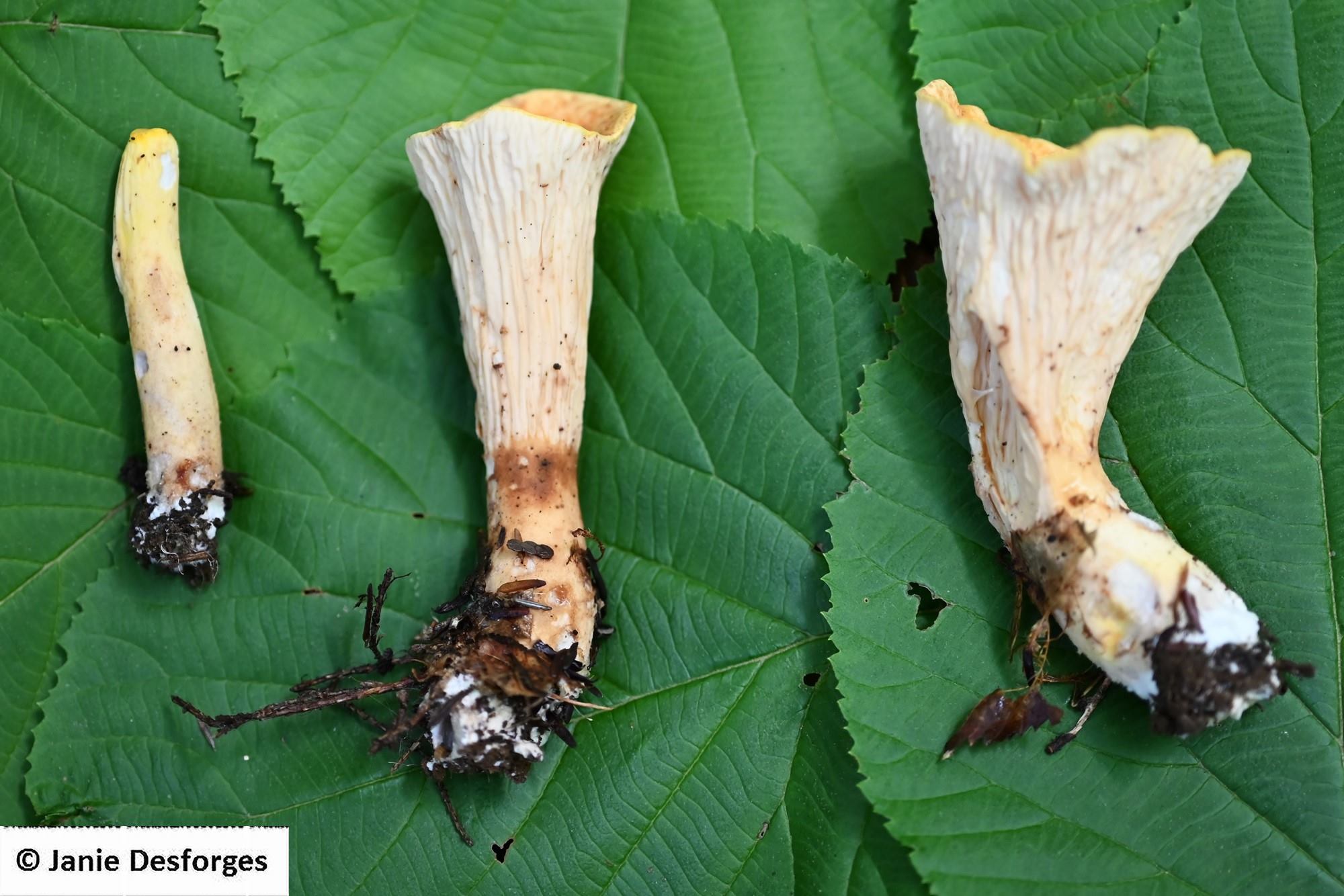
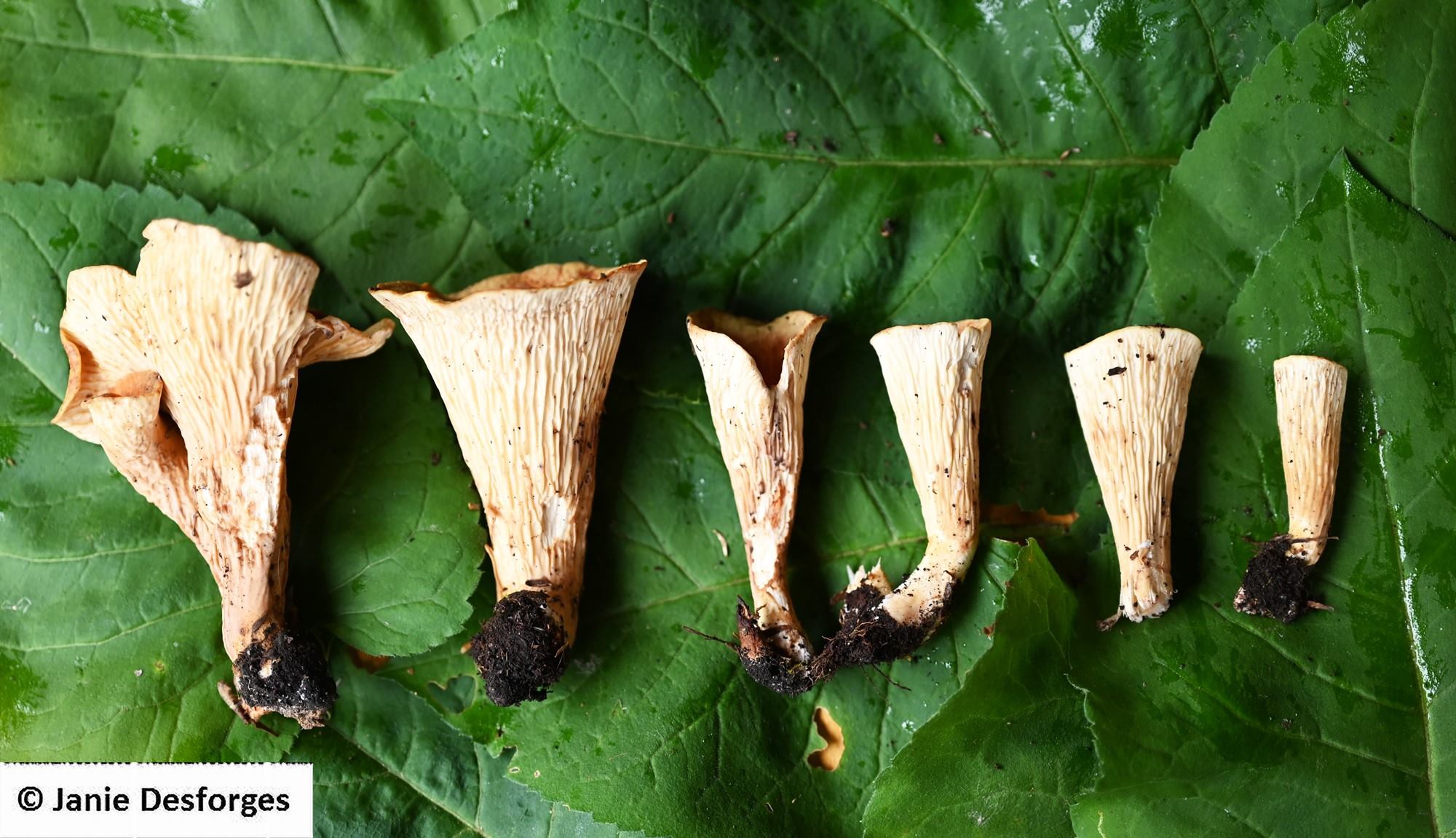
Decurrent ridges running down the stem often forked and cross-veined; creamy when fresh; discoloring and maturing to grey or brownish.


Stalk
Full then hollow, attenuated at the base.
Cream colored and sometimes with yellow orange tinges.


Flesh
The white flesh is immutable, thick and fibrous.


Basal Mycelium
Basal mycelium white.
Comments
Send a comment
Its taste is tangy and the narcoperatic acid it contains can cause stomach upset for some people : nausea, vomiting and diarrhea. Though they can be delayed by up to 8 or 14 hours.
Turbinellus floccosus is eaten by some people in Northeasters India, Nepal and Mexico.
More photos


For more informations