Identifying Your Polypores
4a-6
Dyer’s polypore
Phaeolus hispidoides
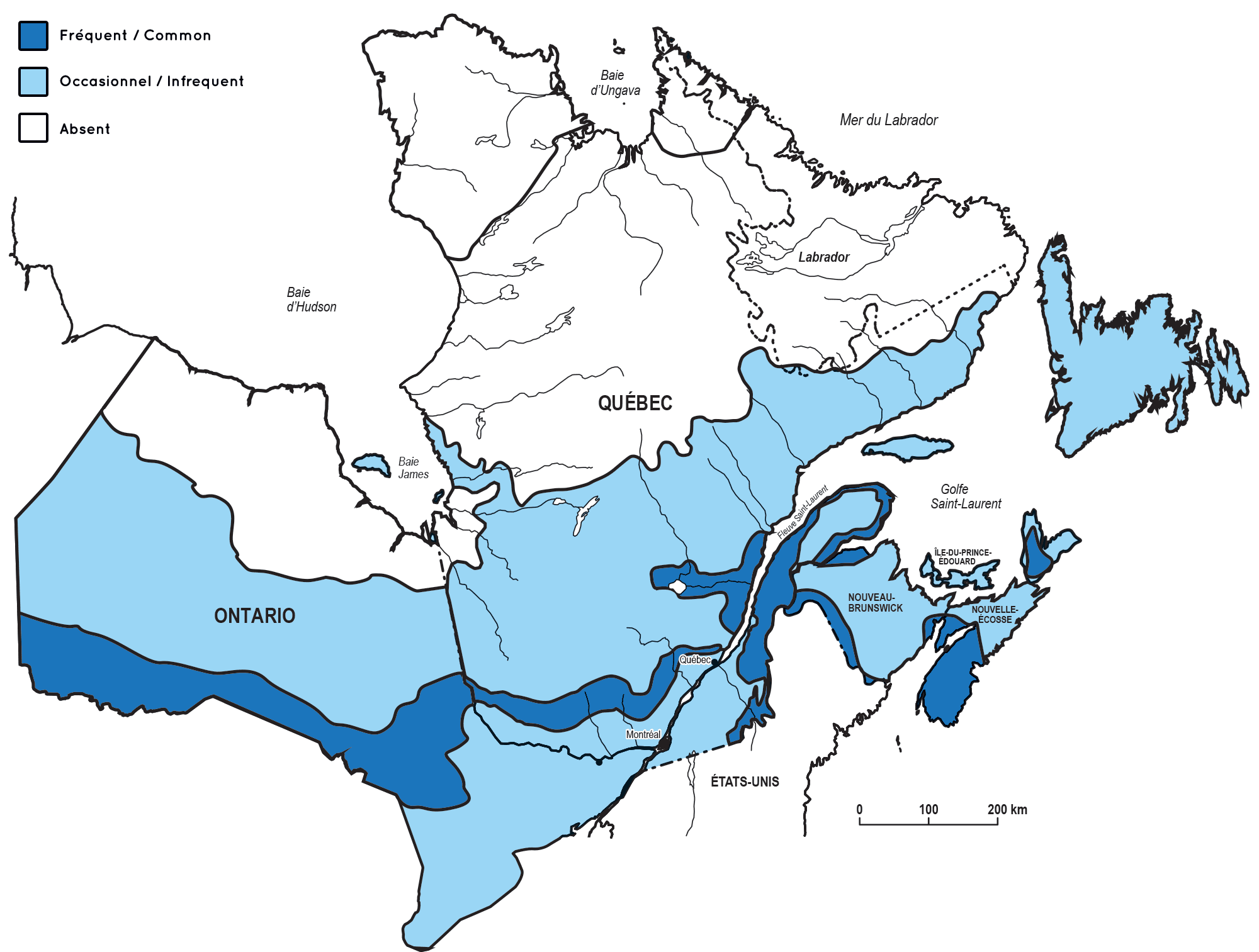
Frequency
Frequent

Habitat
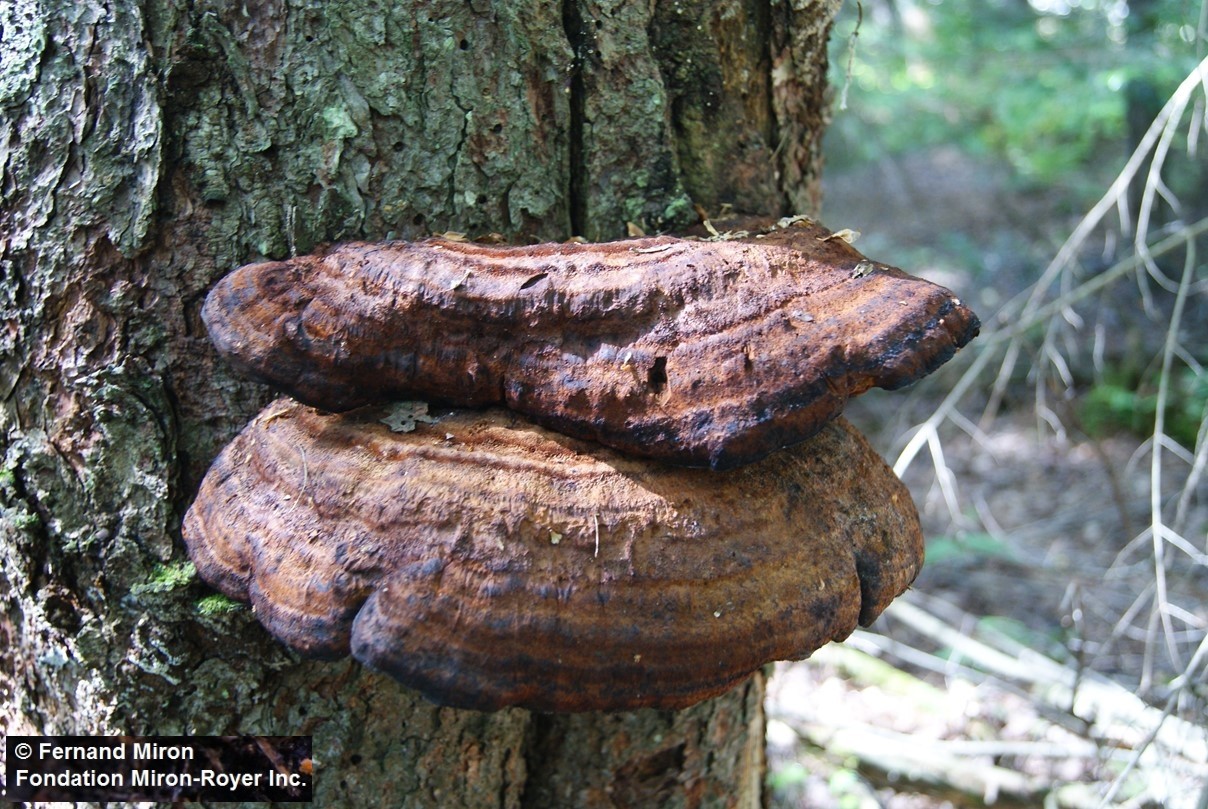
Parasitic, on coniferous wood, sometimes deciduous trees; also helps to decompose dead trees.
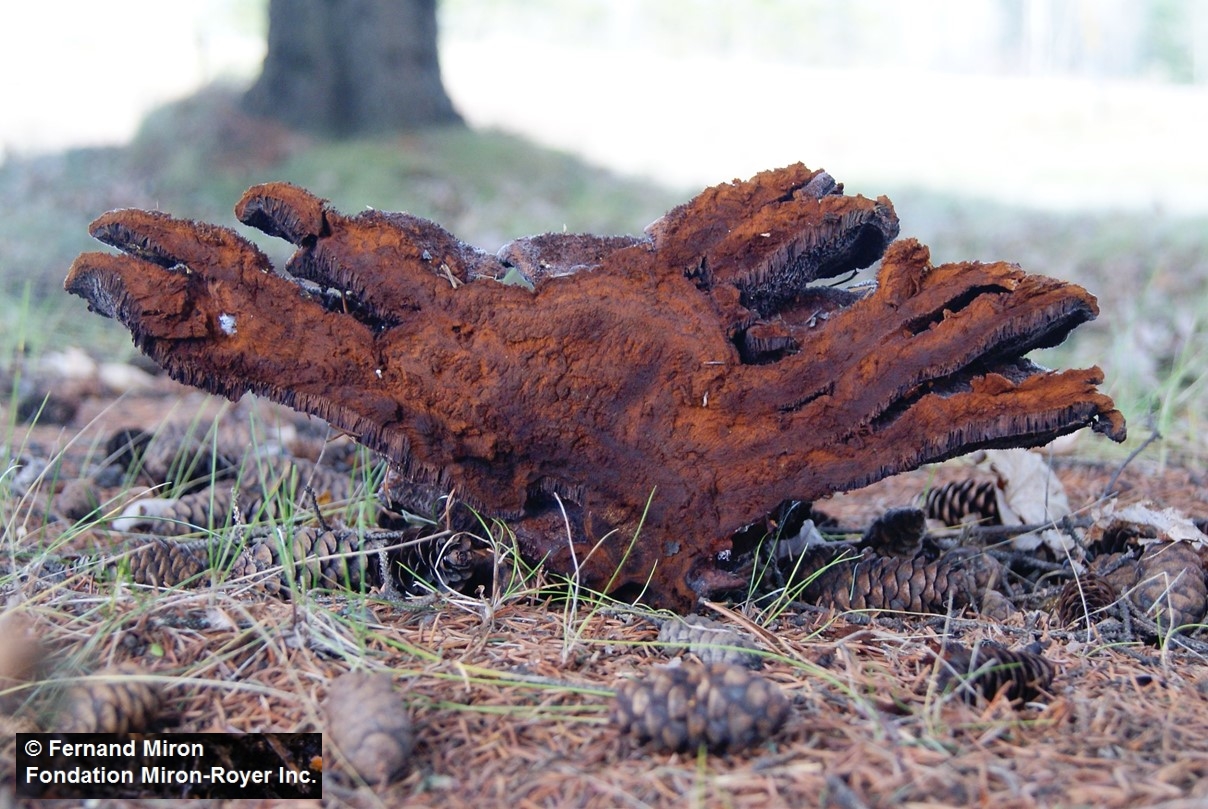
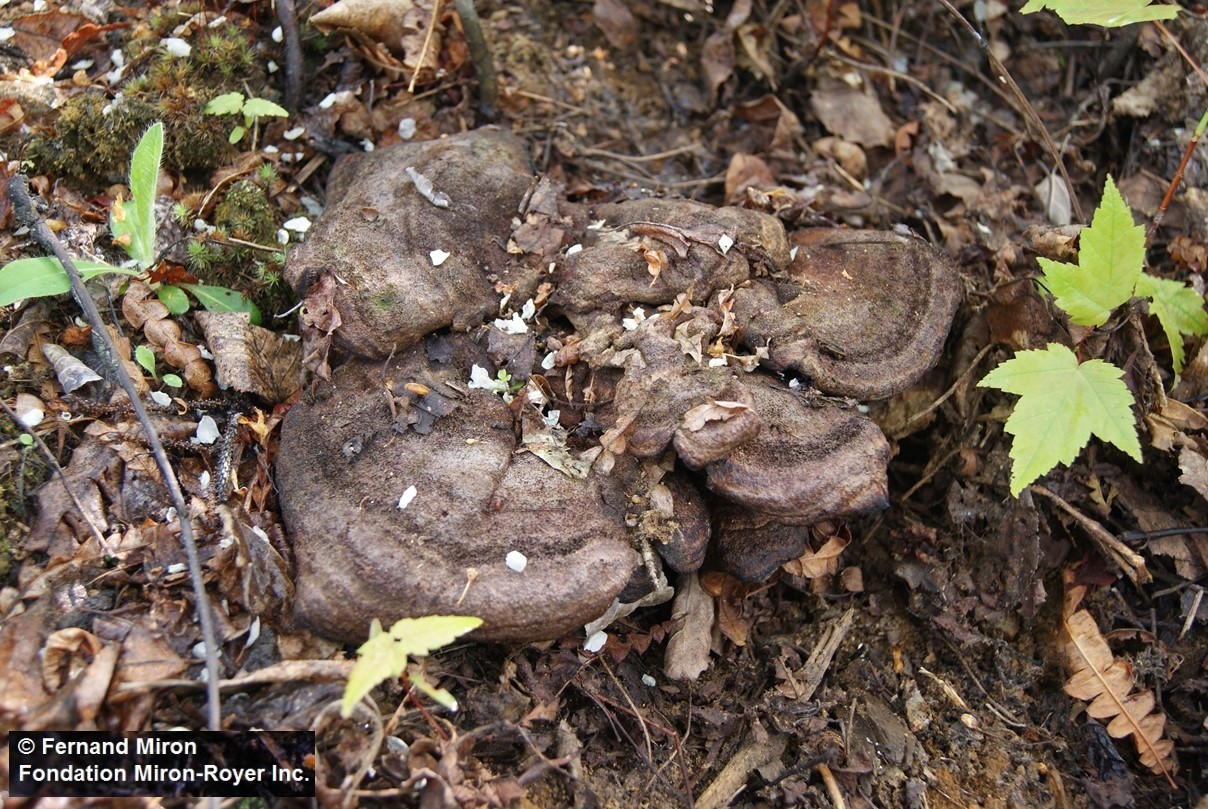
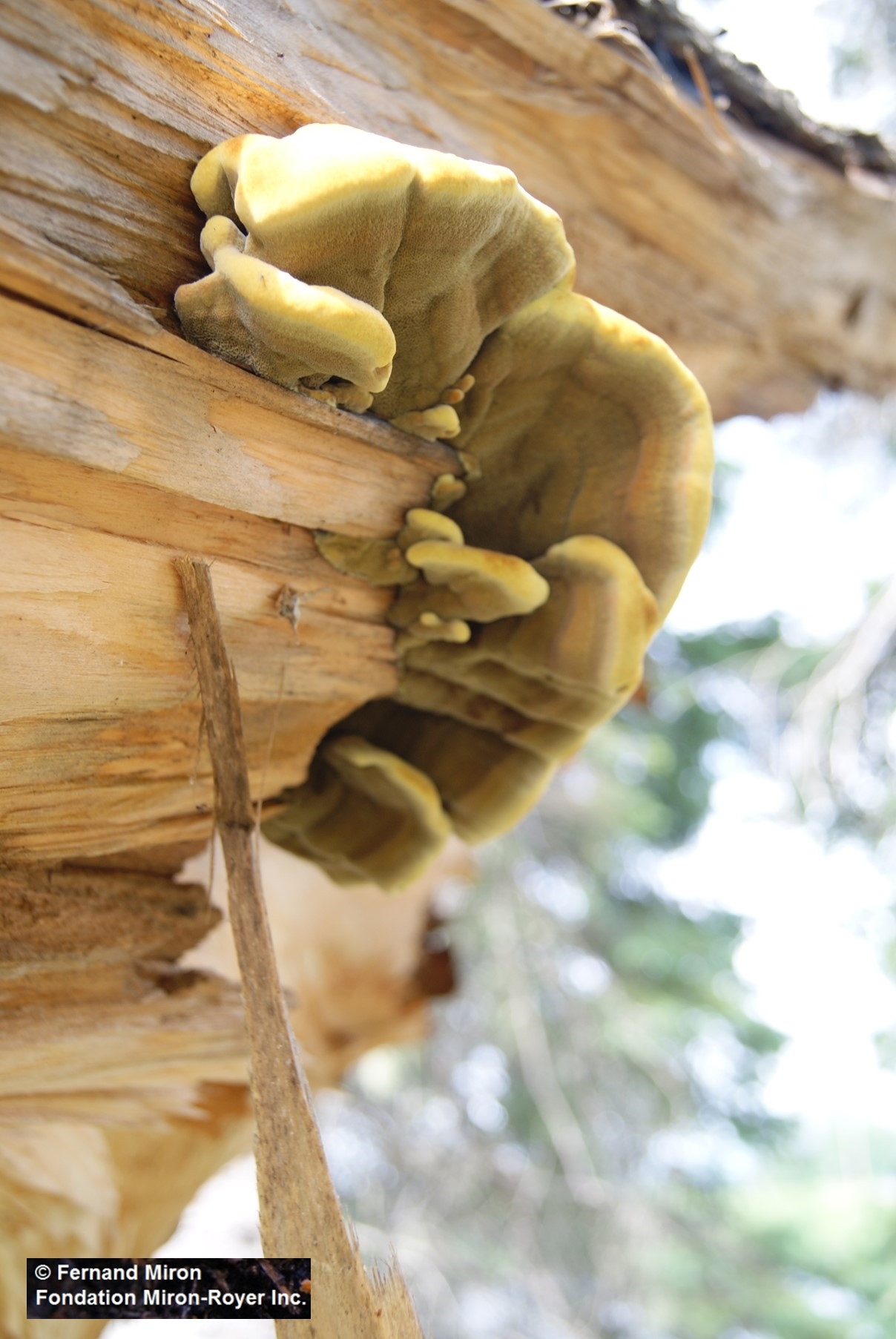
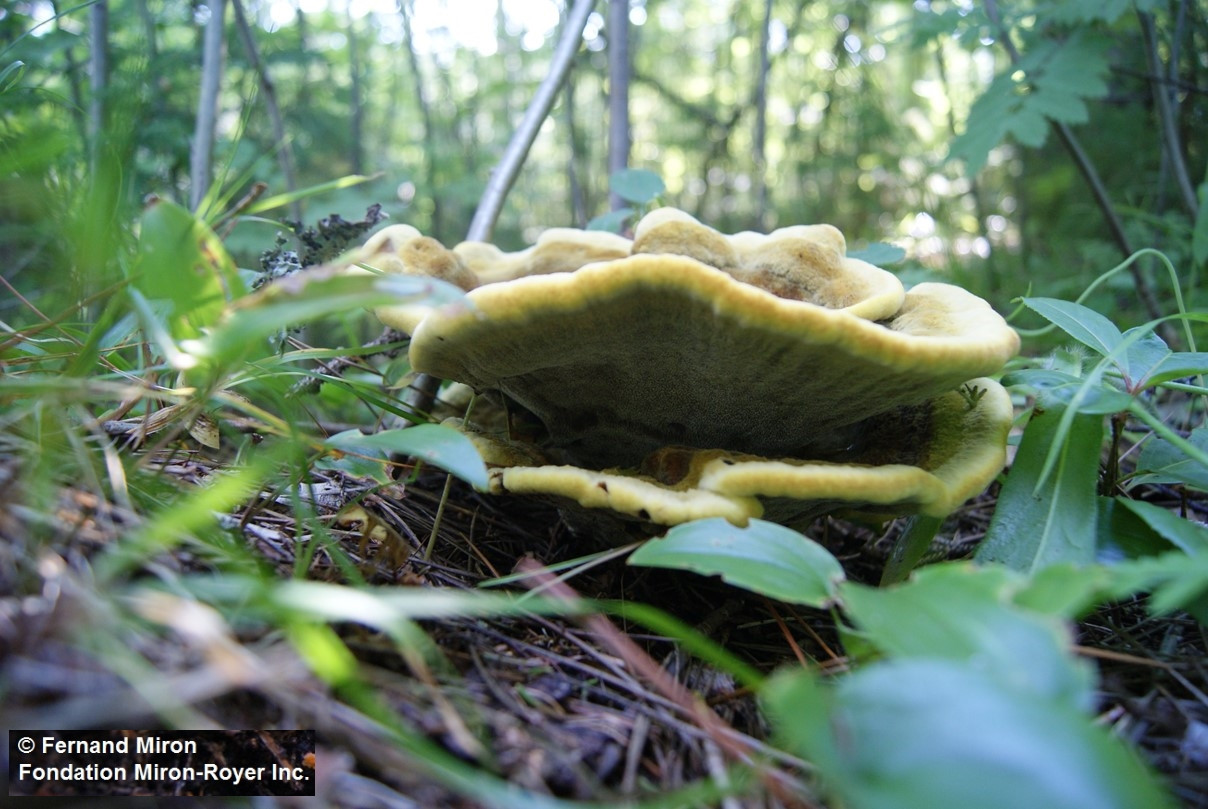
On the ground or on the trunks lying down or vertical. Annual.
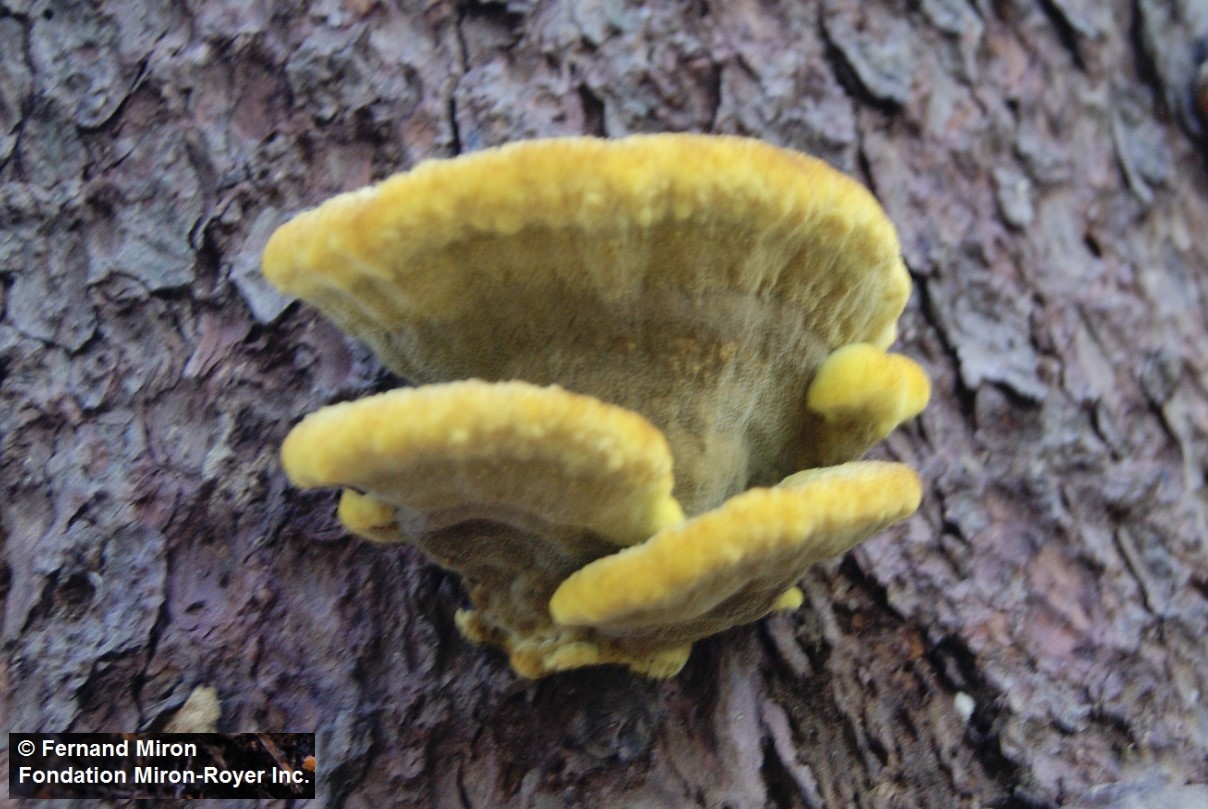
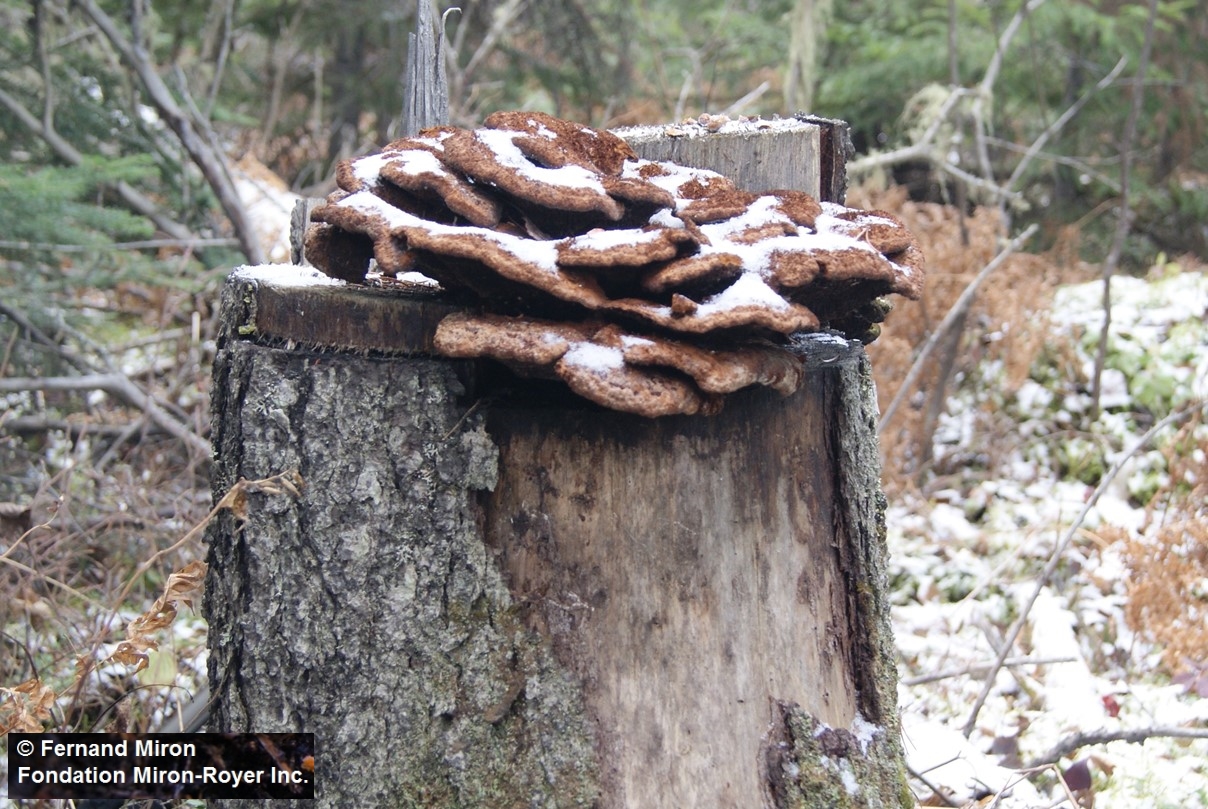
Cap
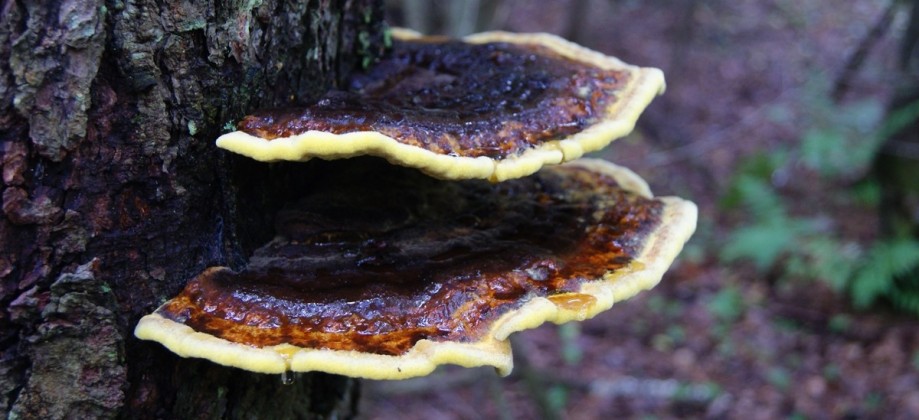
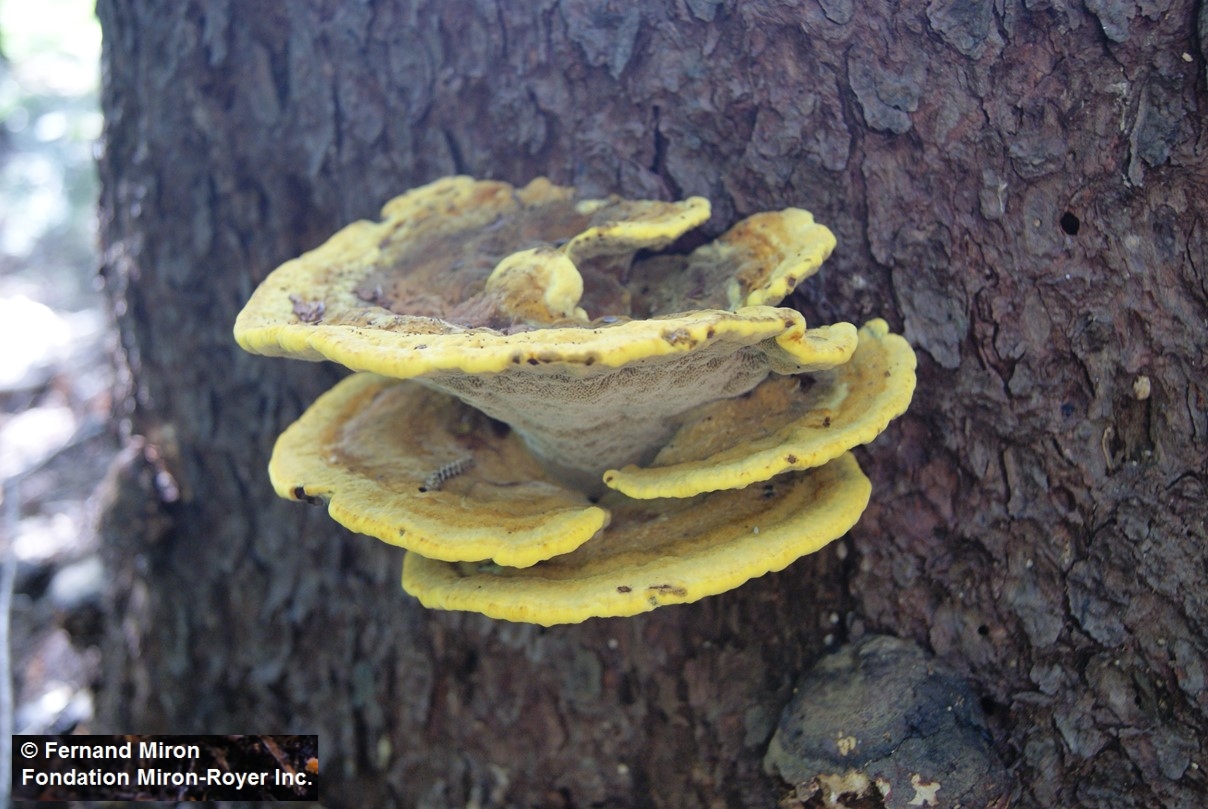
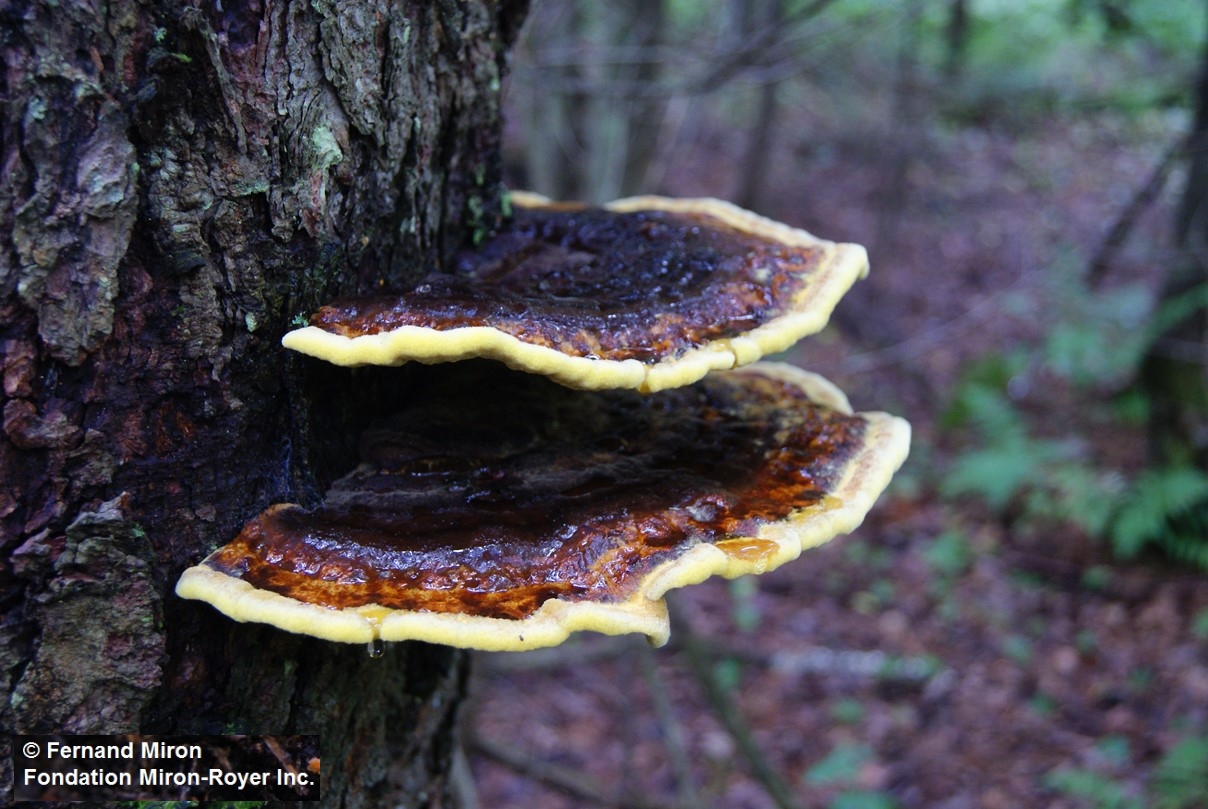
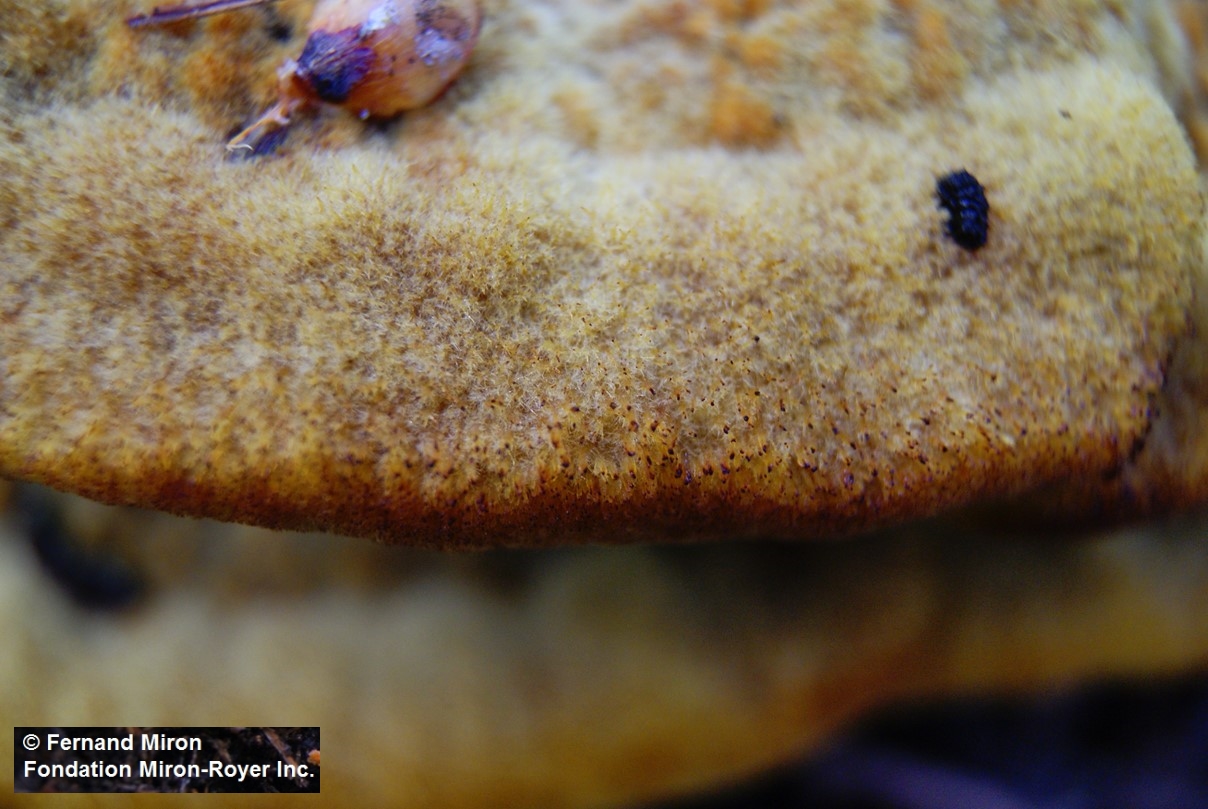
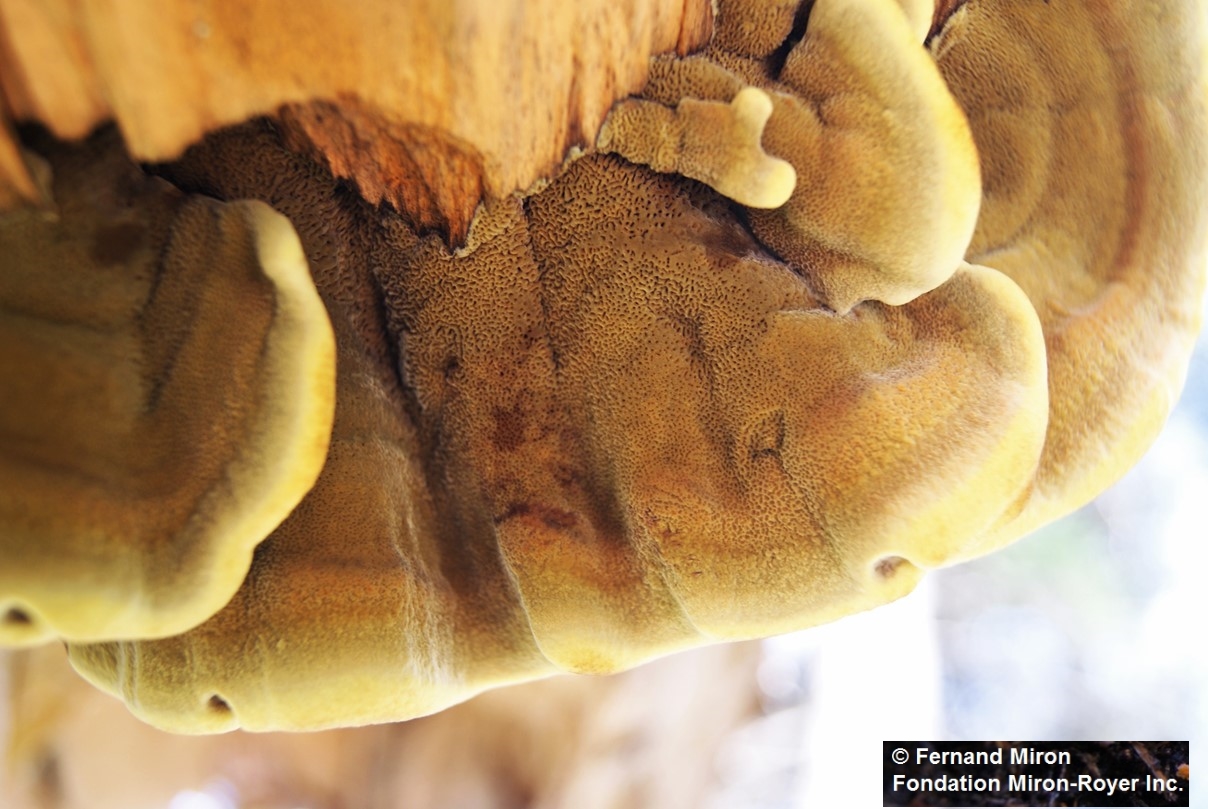
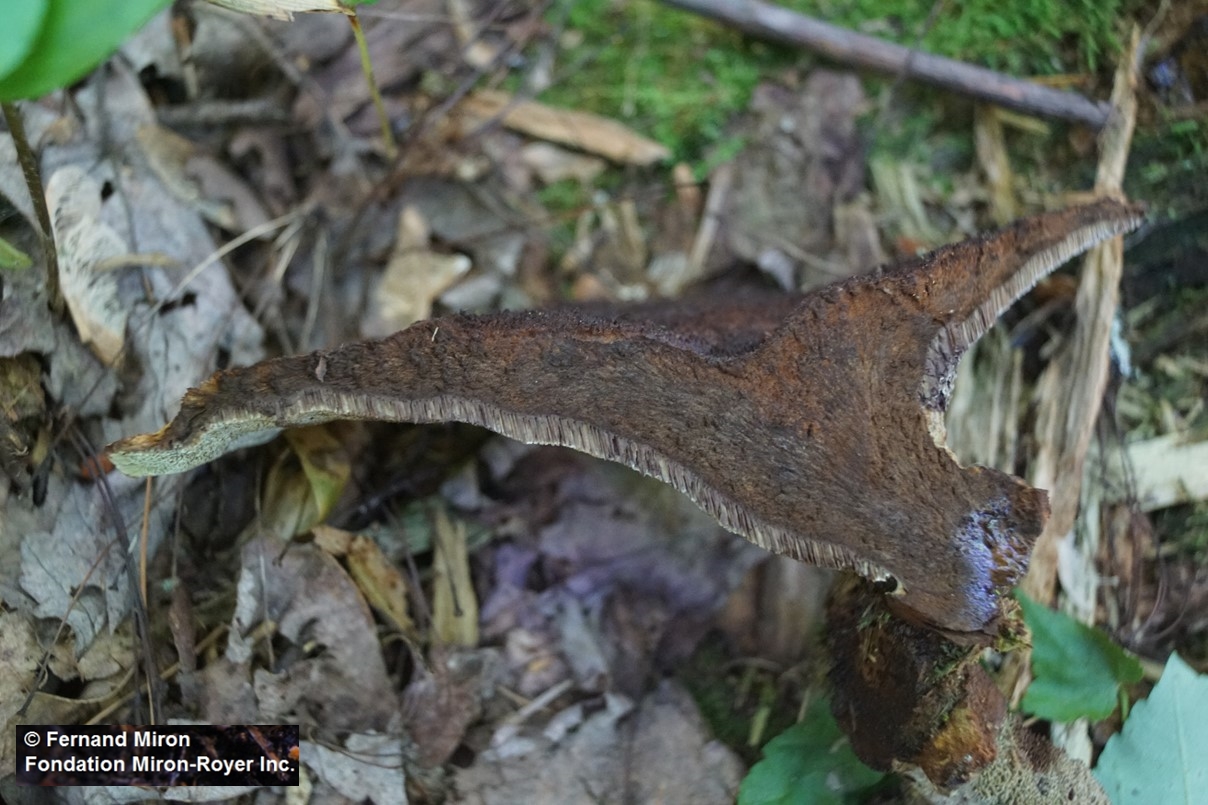
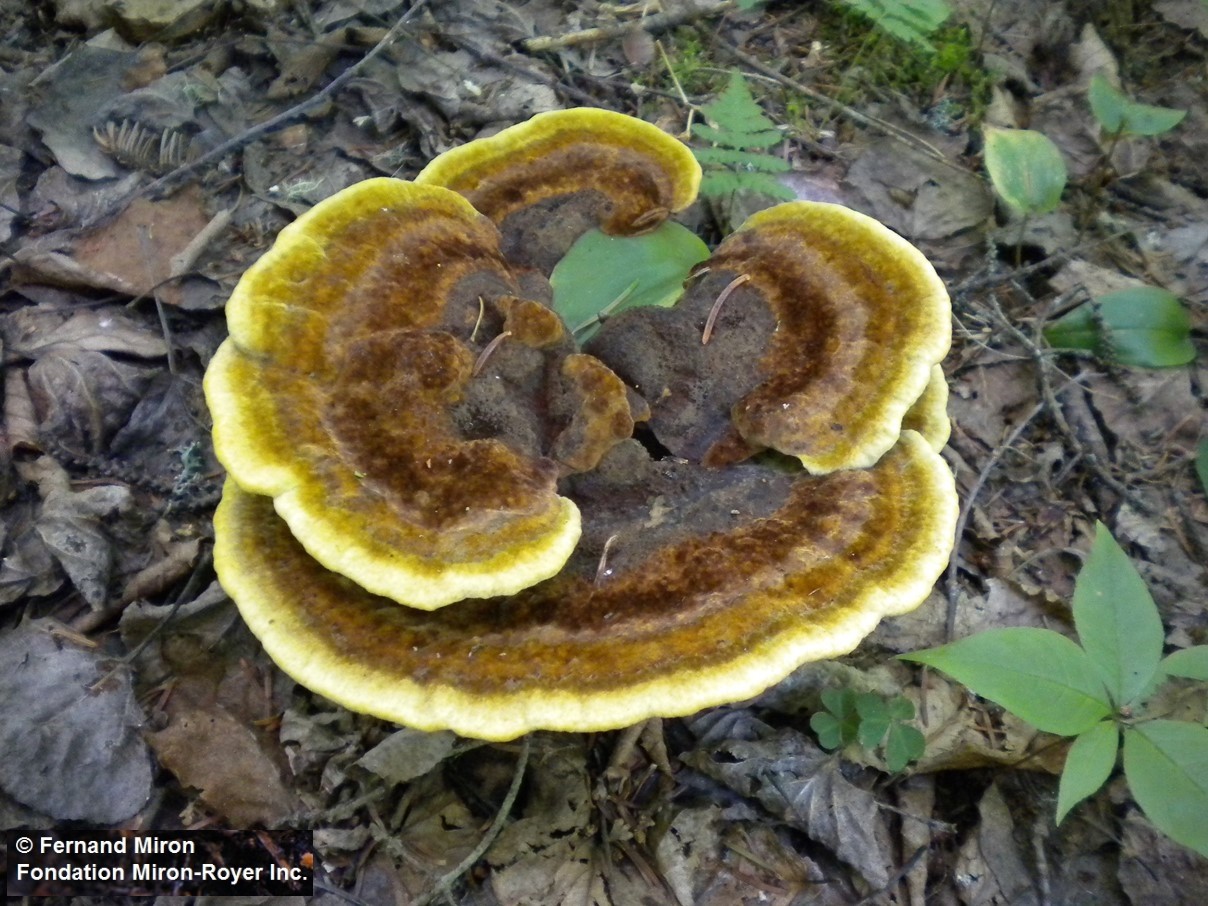
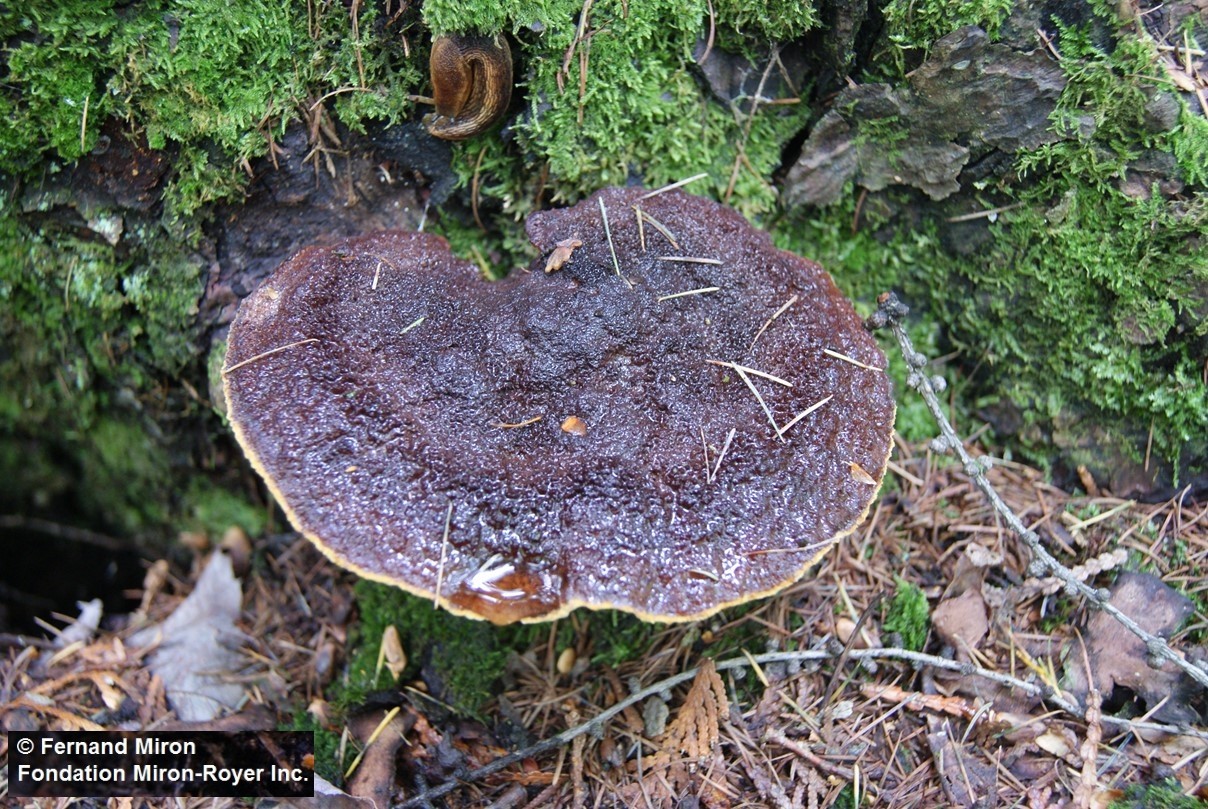
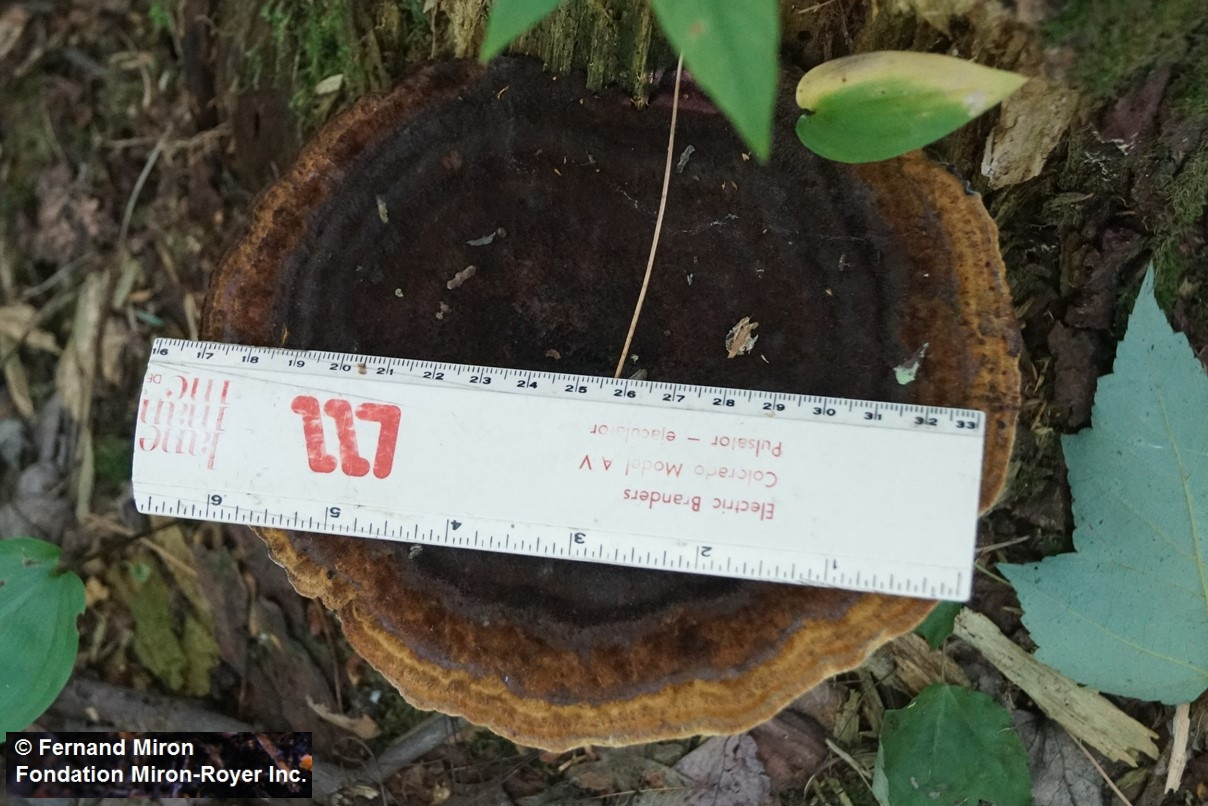
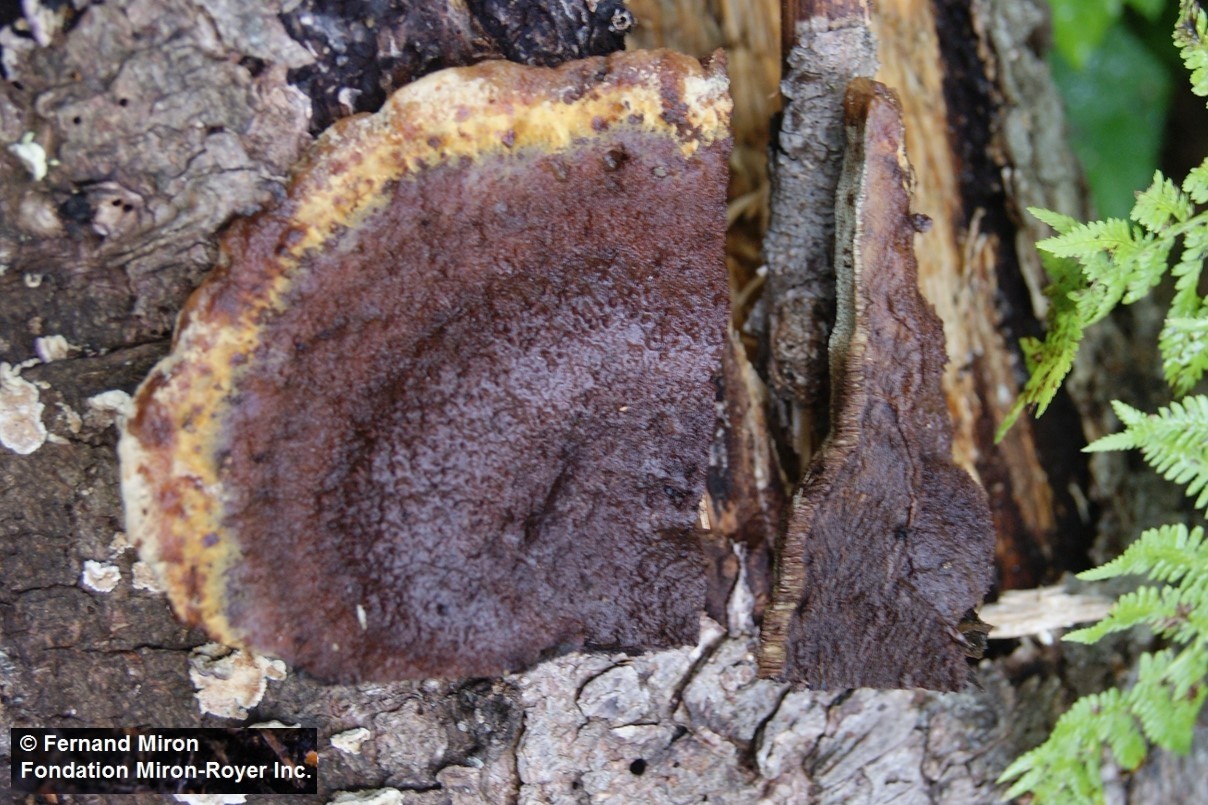
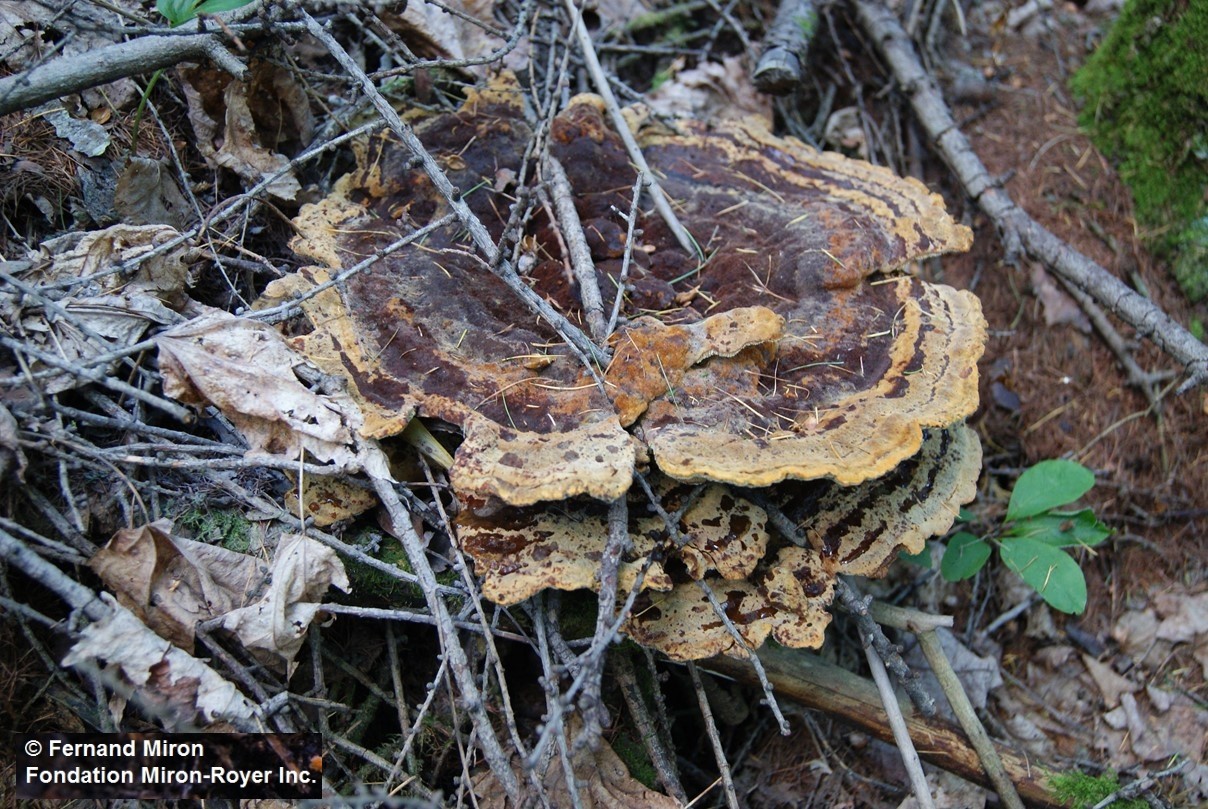
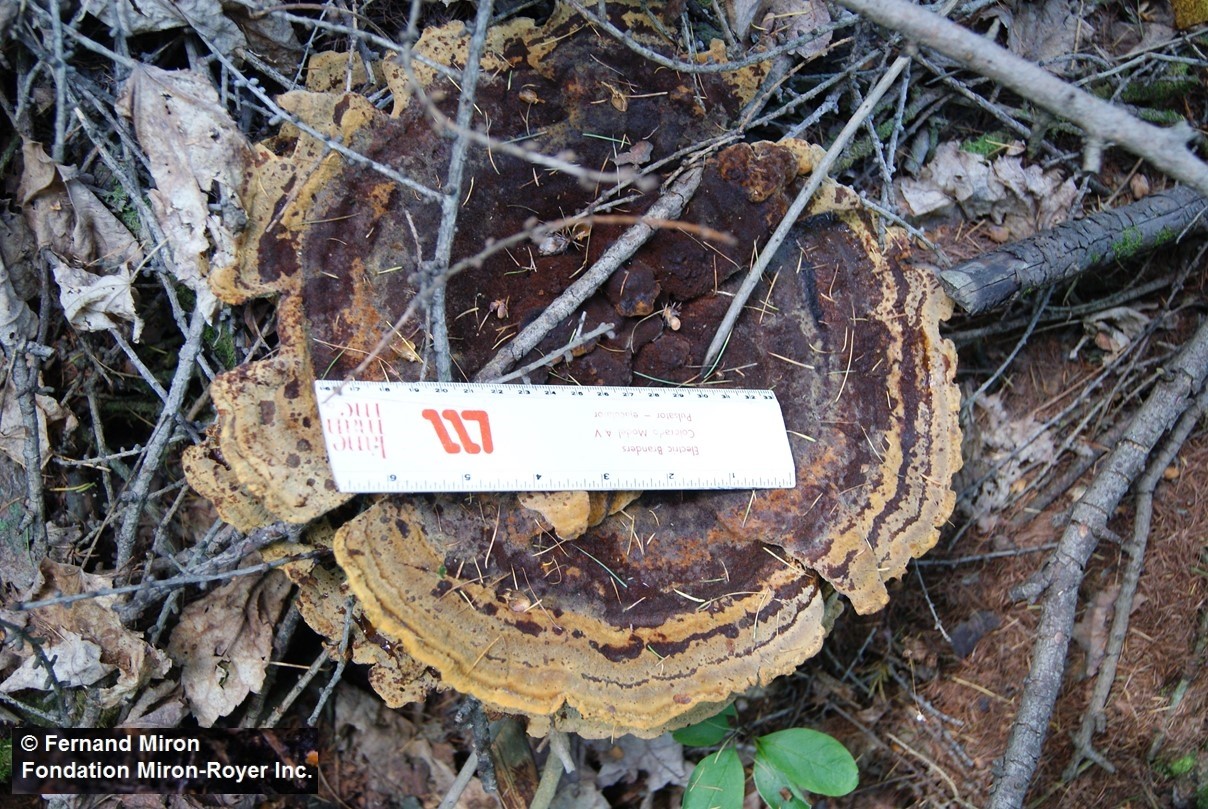
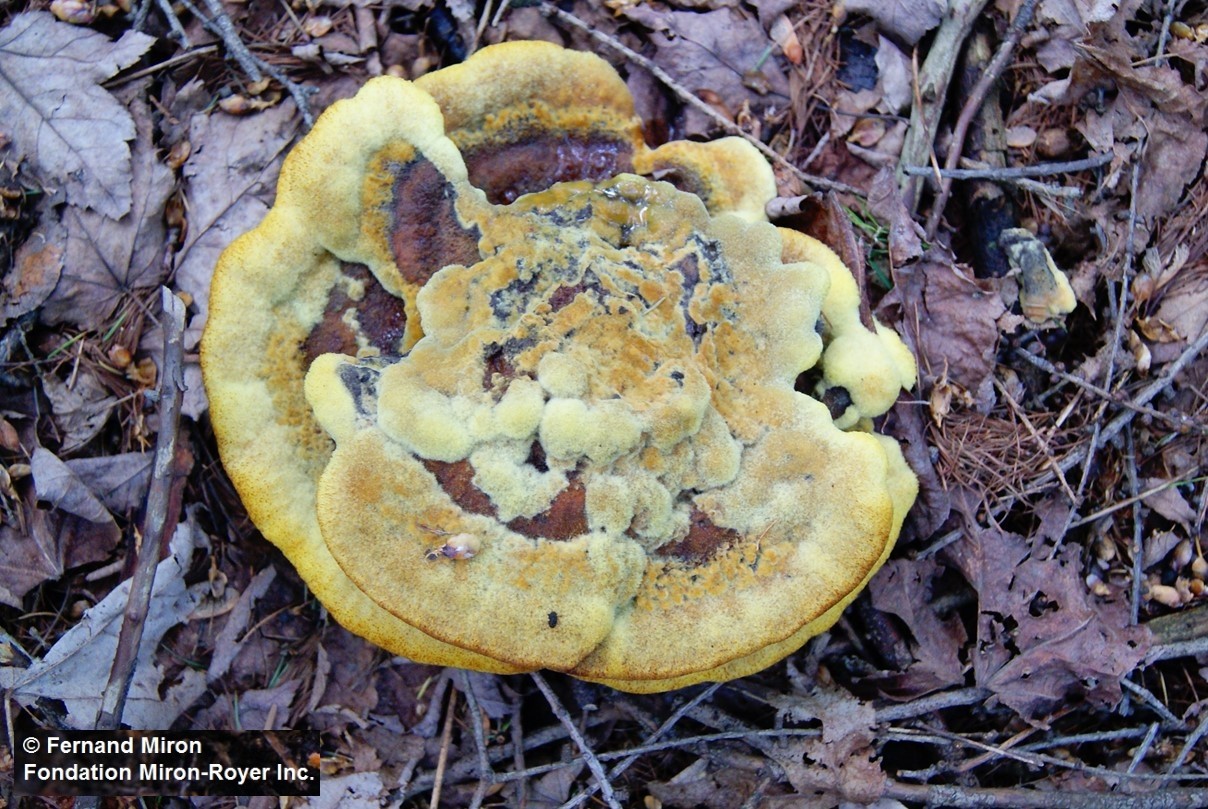
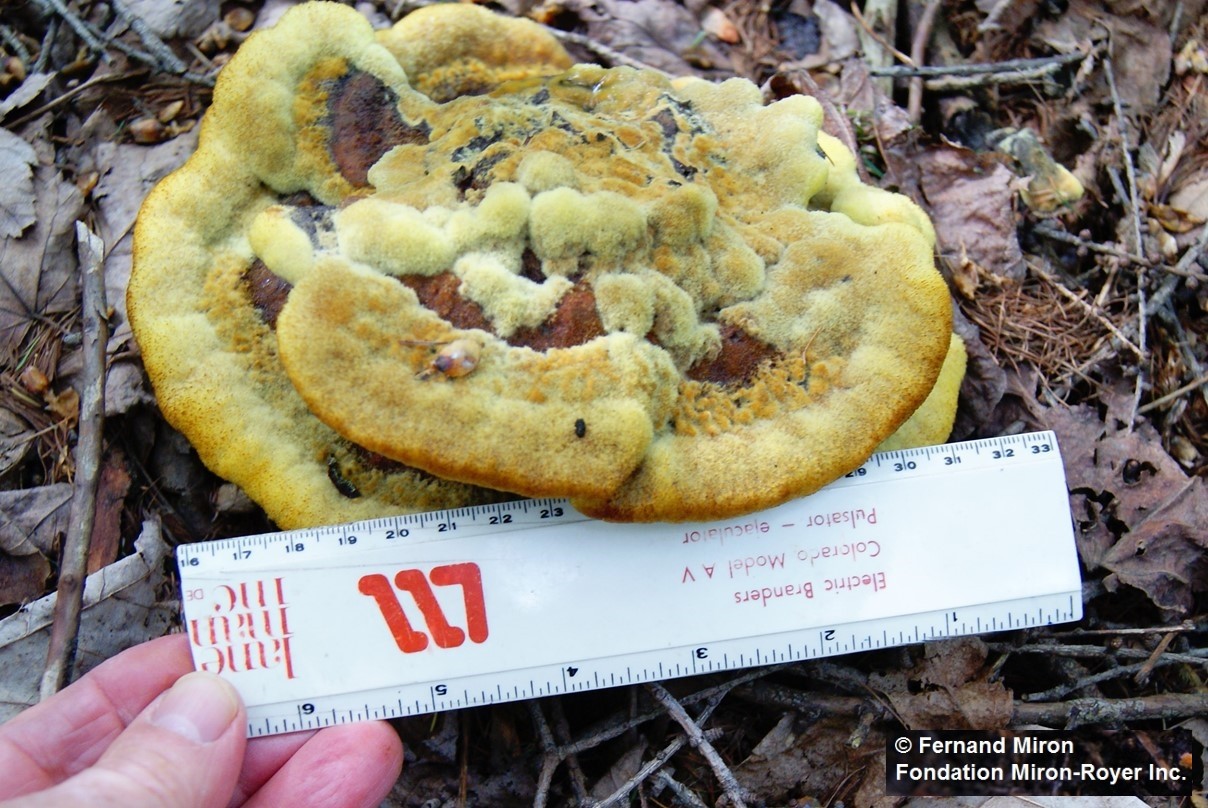
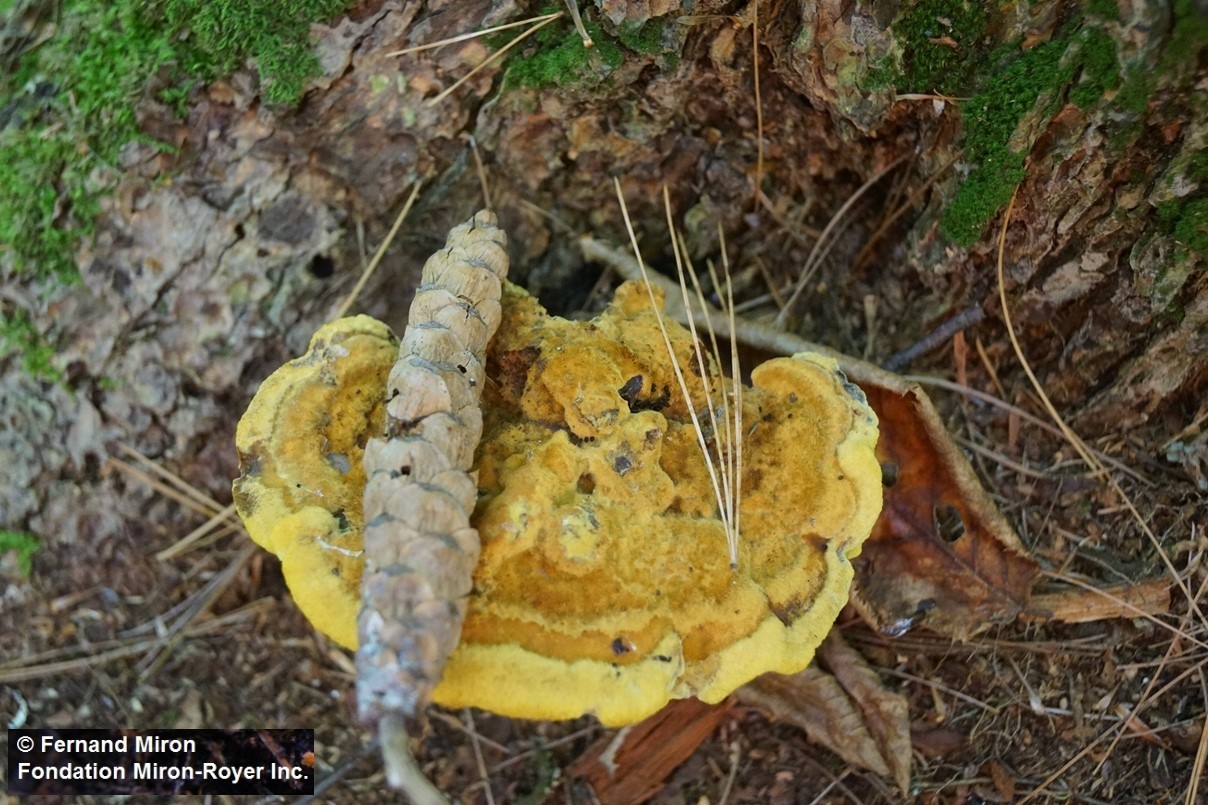
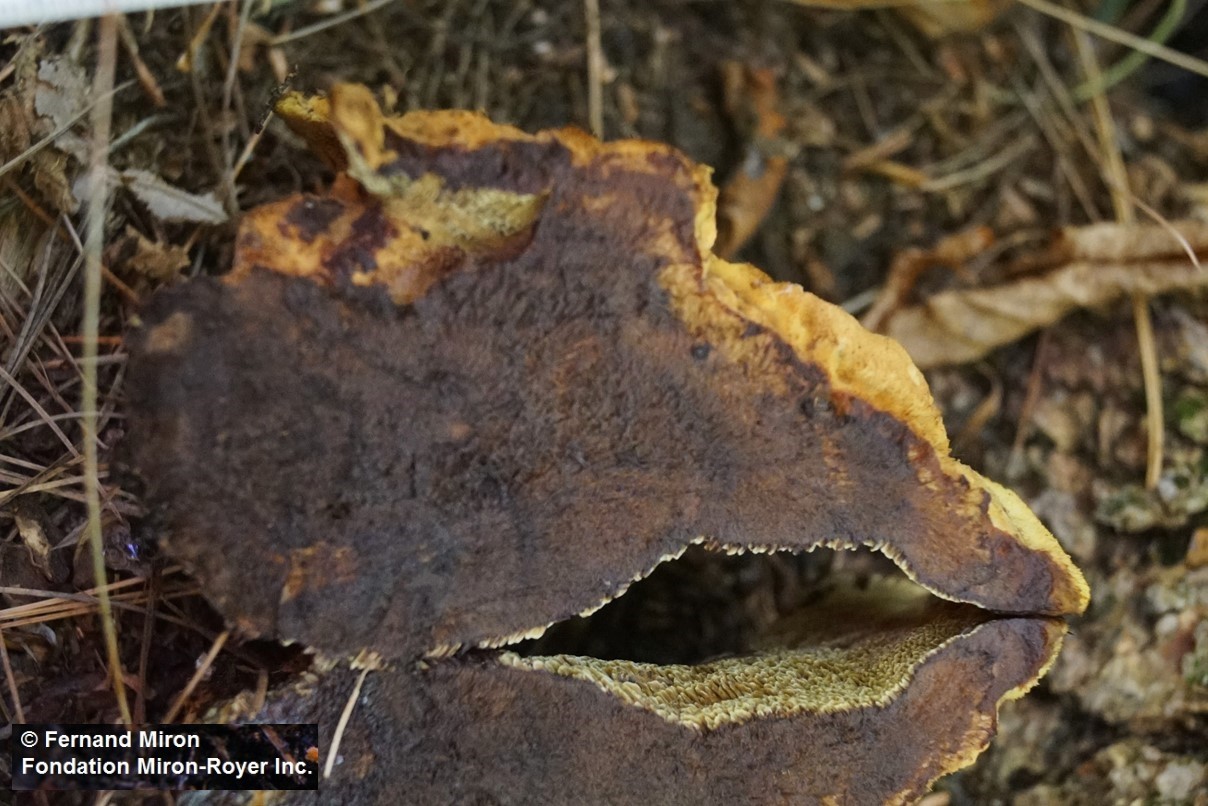
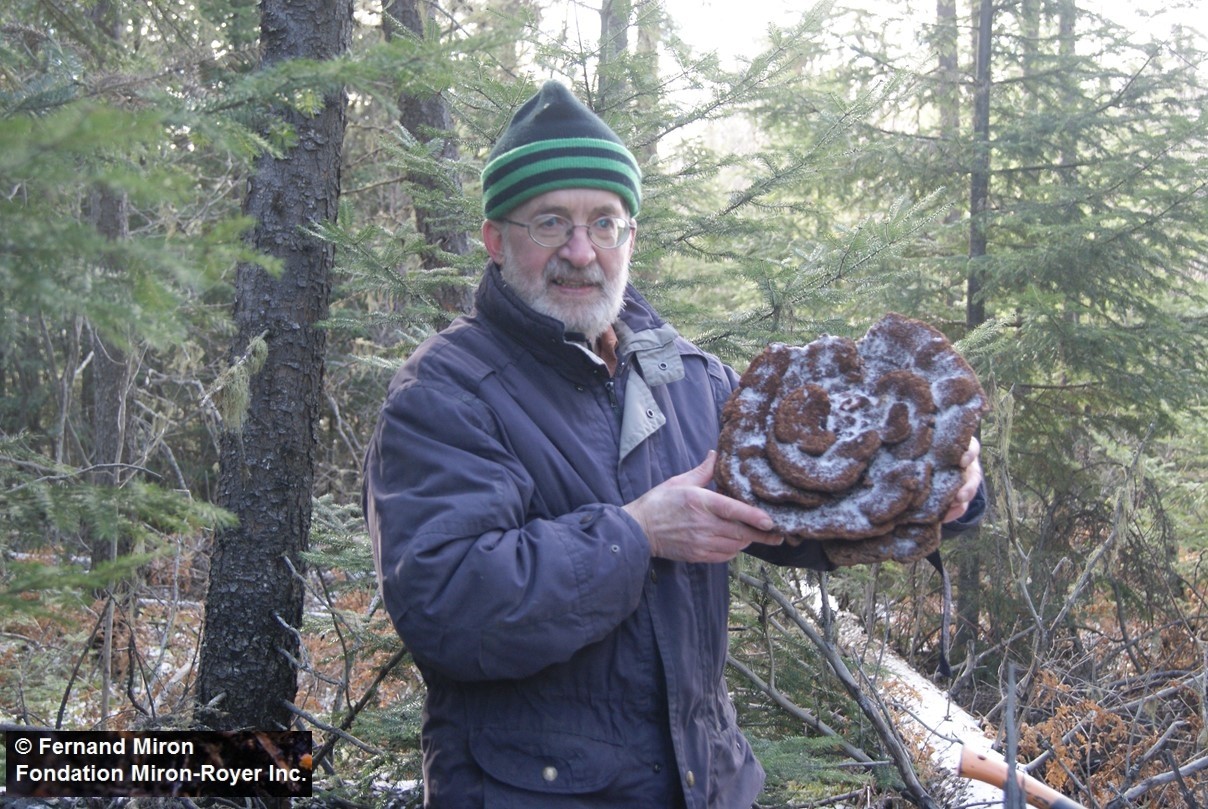
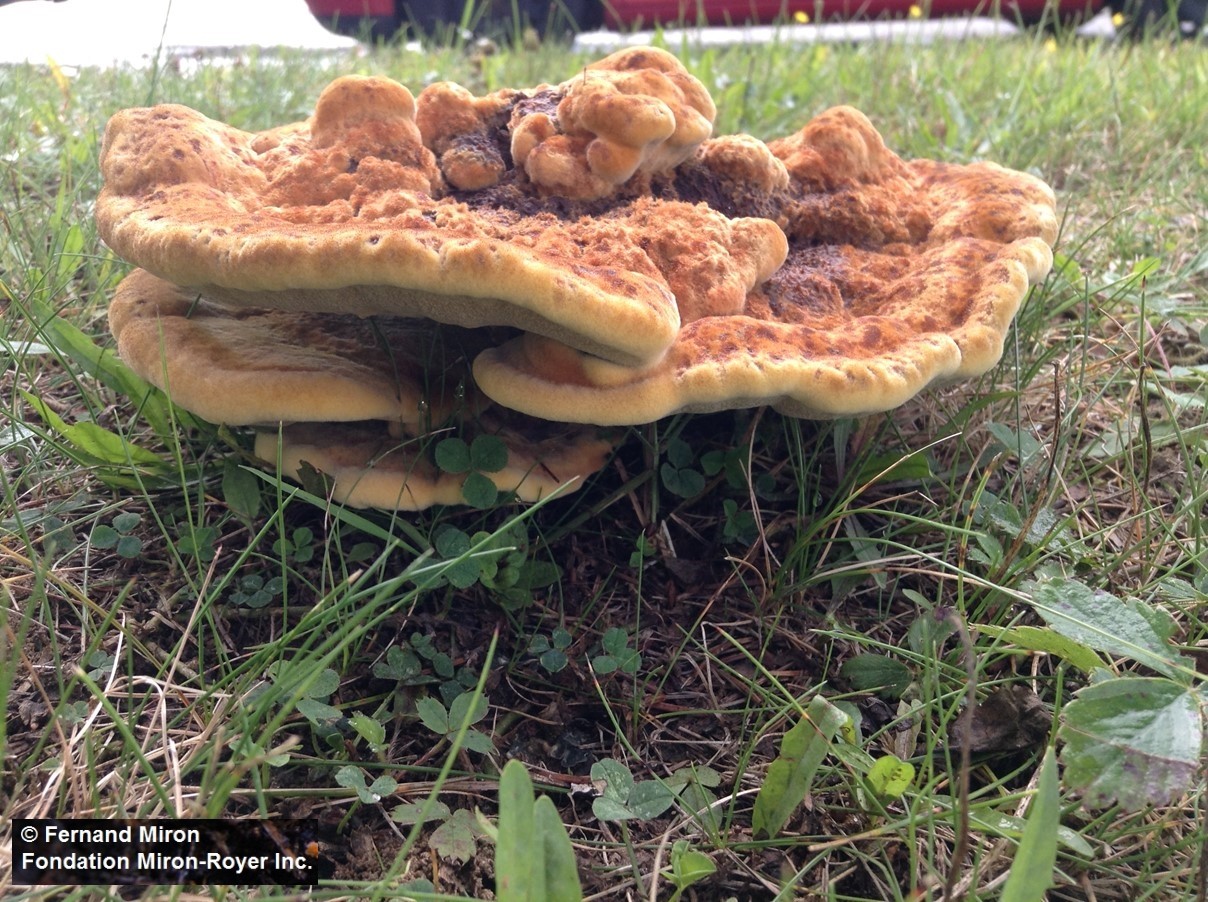
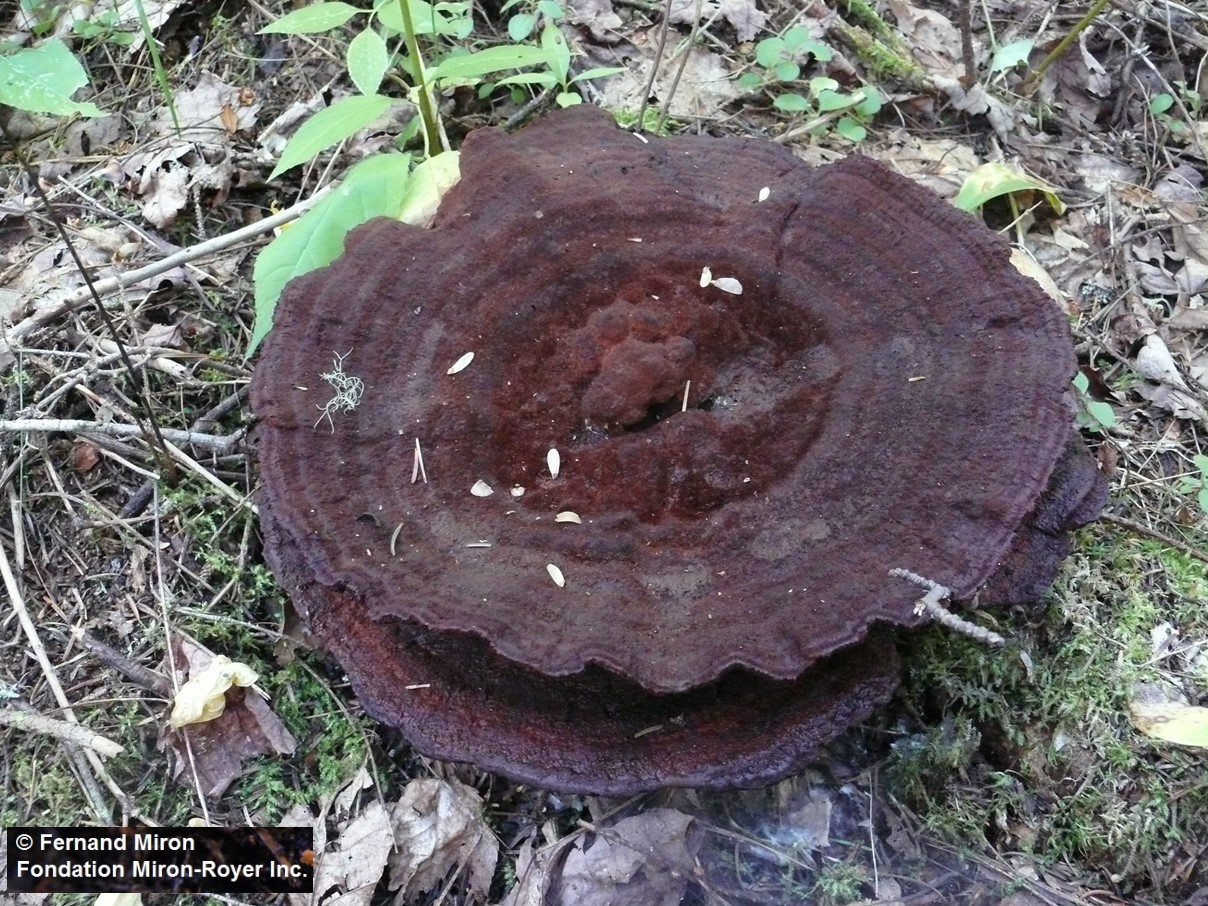
Hairy to shaggy, bumpy, often several lobes overlap, orange at first, yellowish-brown later, blackish at the end.
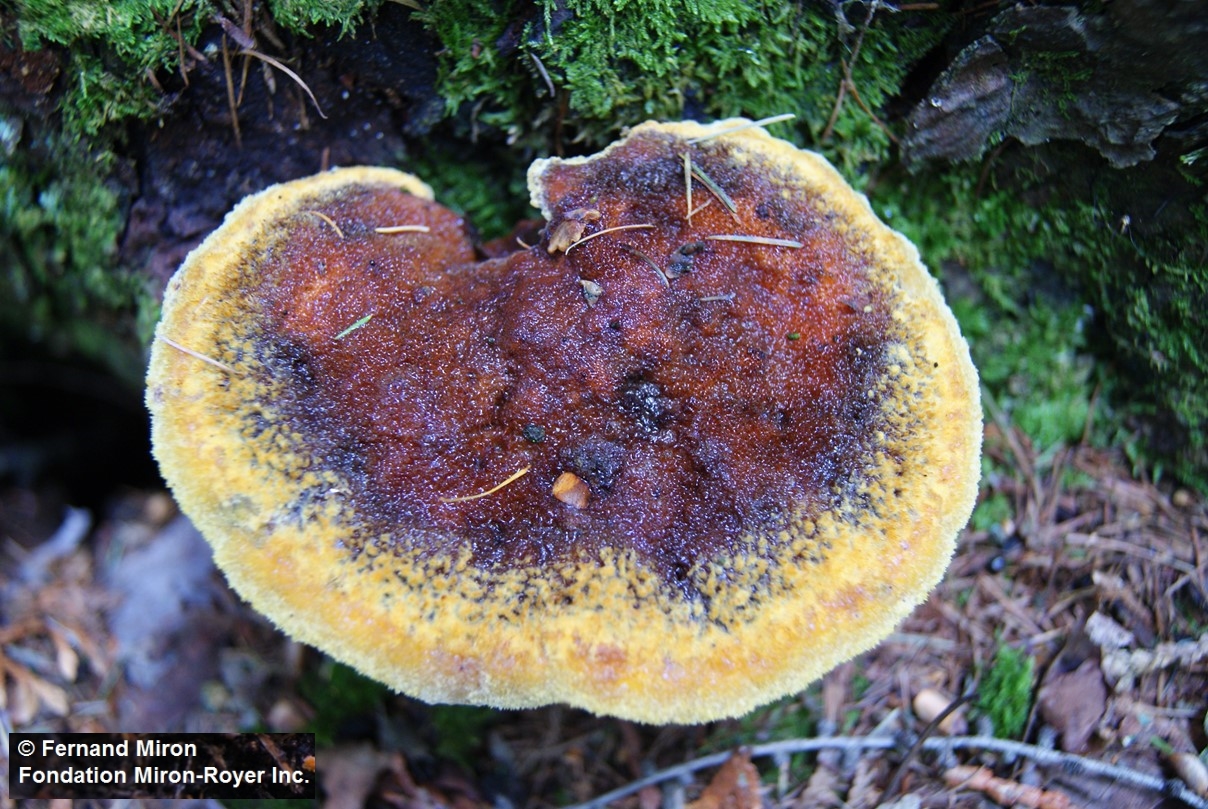
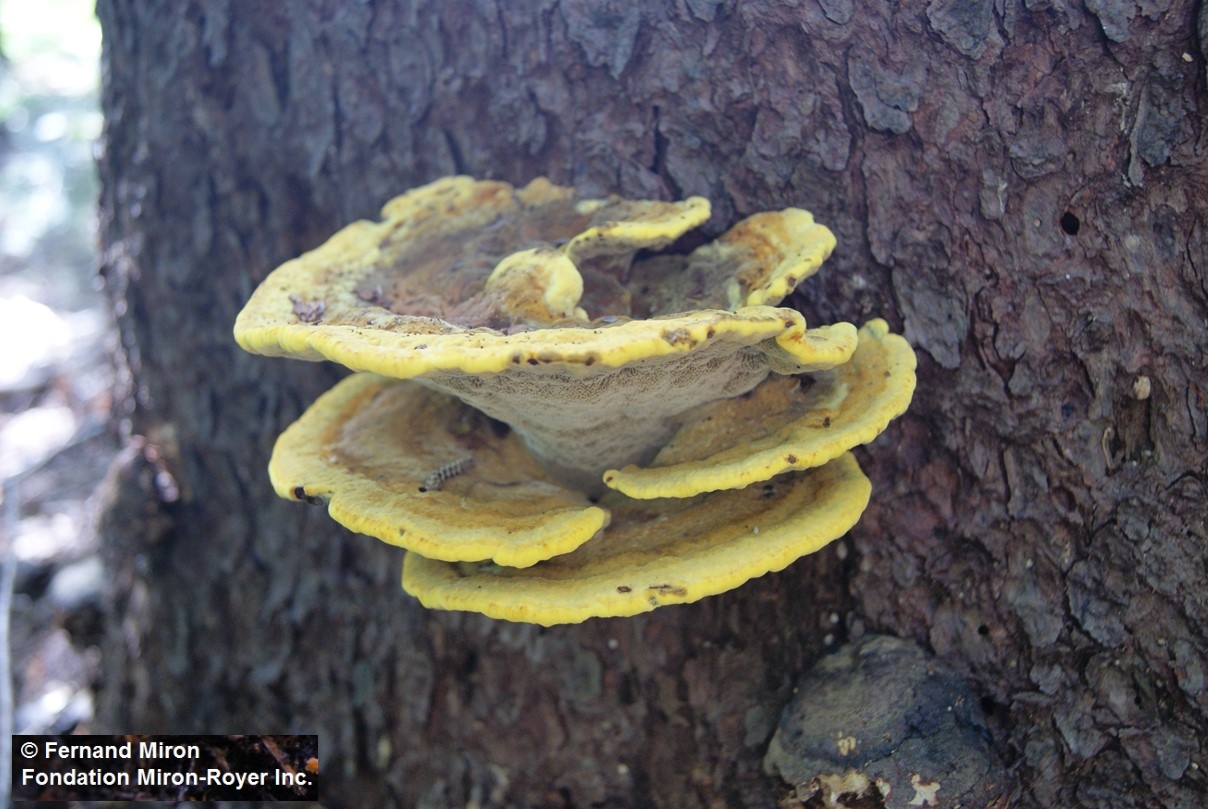
Margin
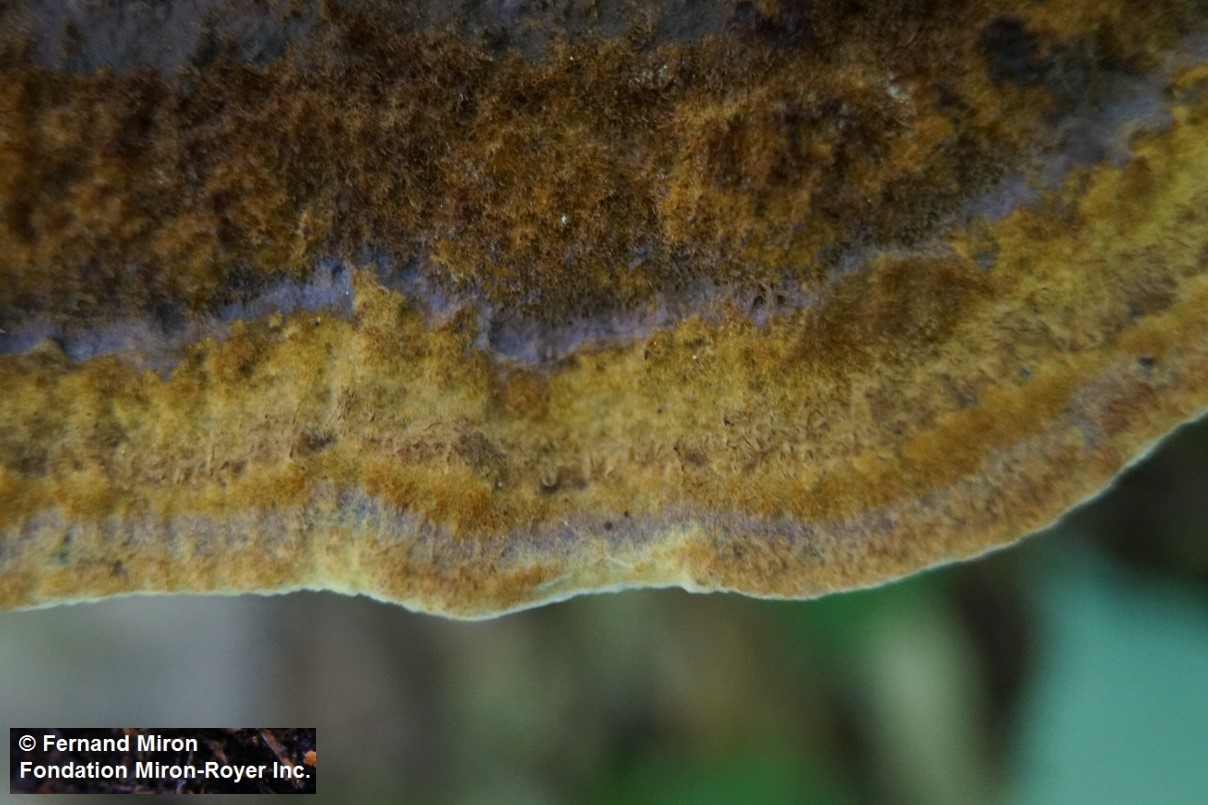
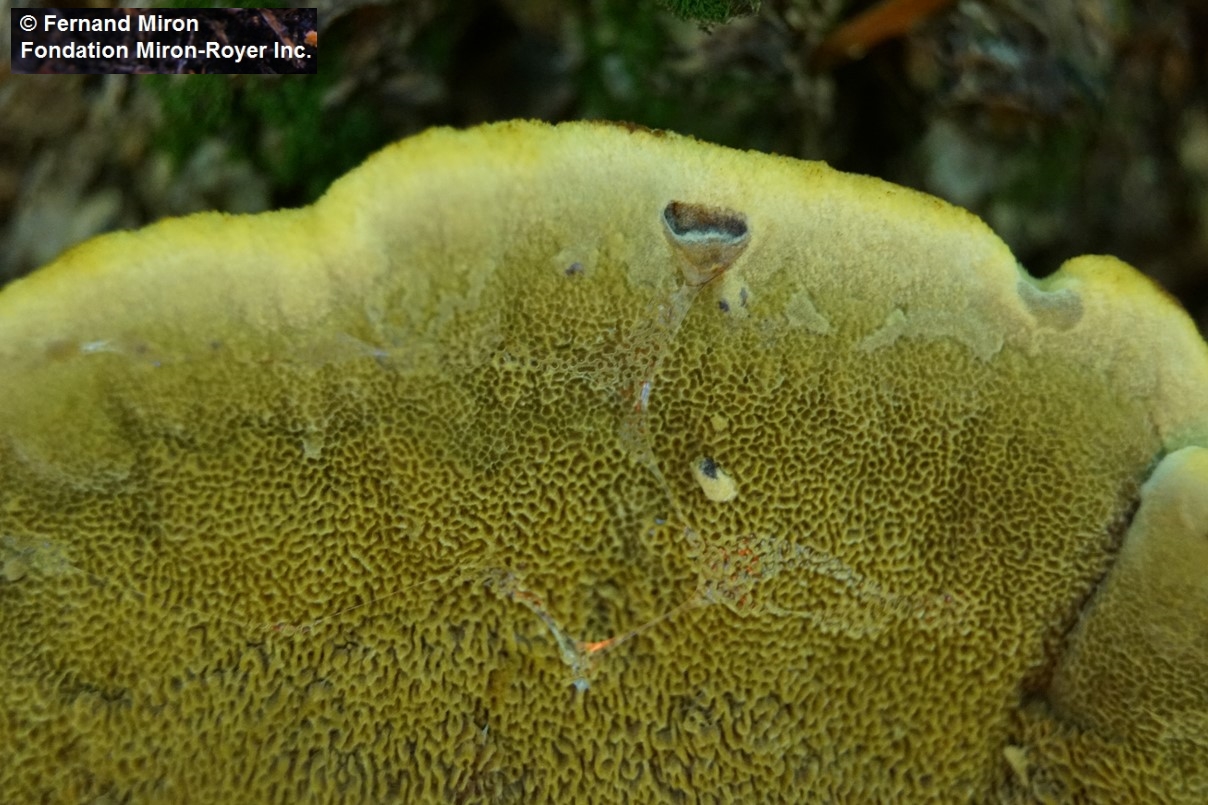
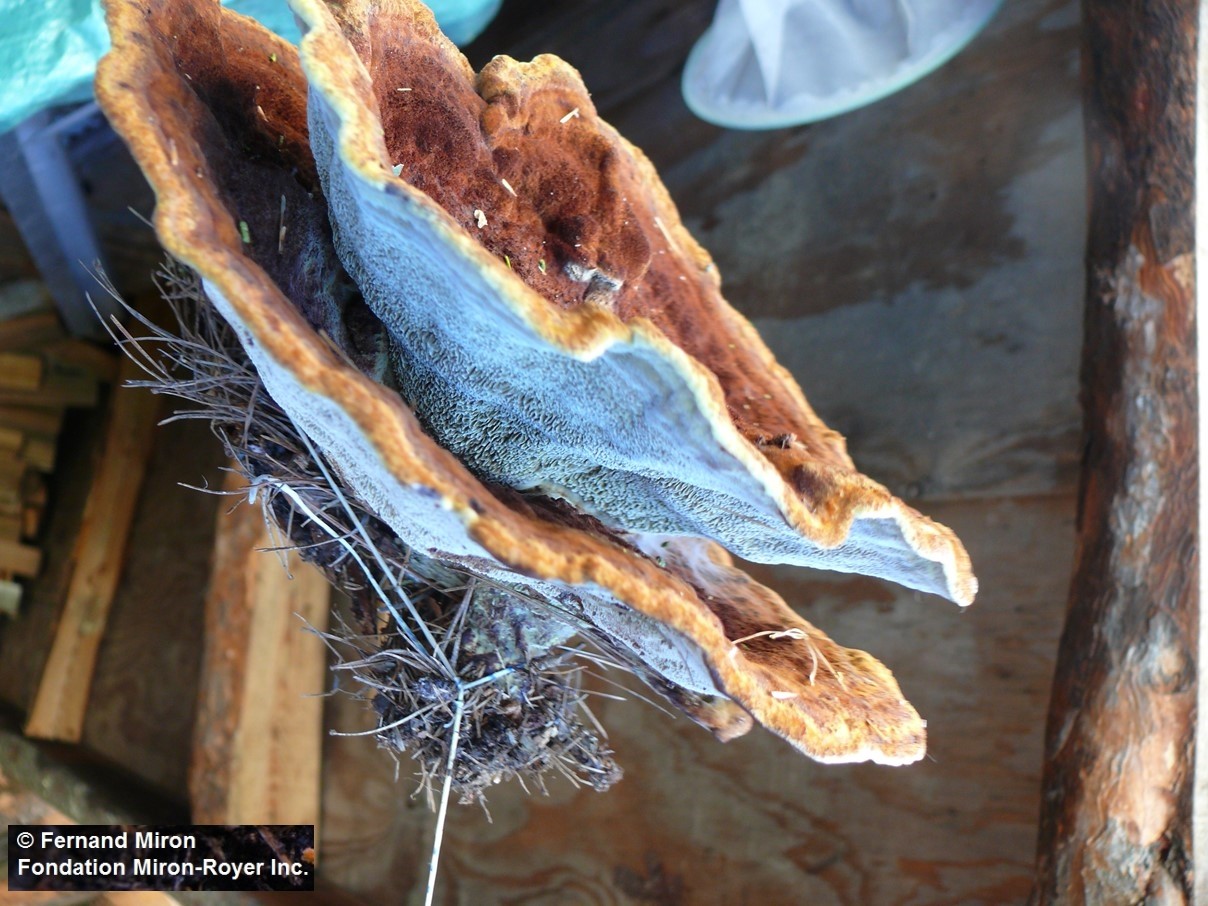
Sulphur-yellow to yellowish-green, darker with age
Tubes
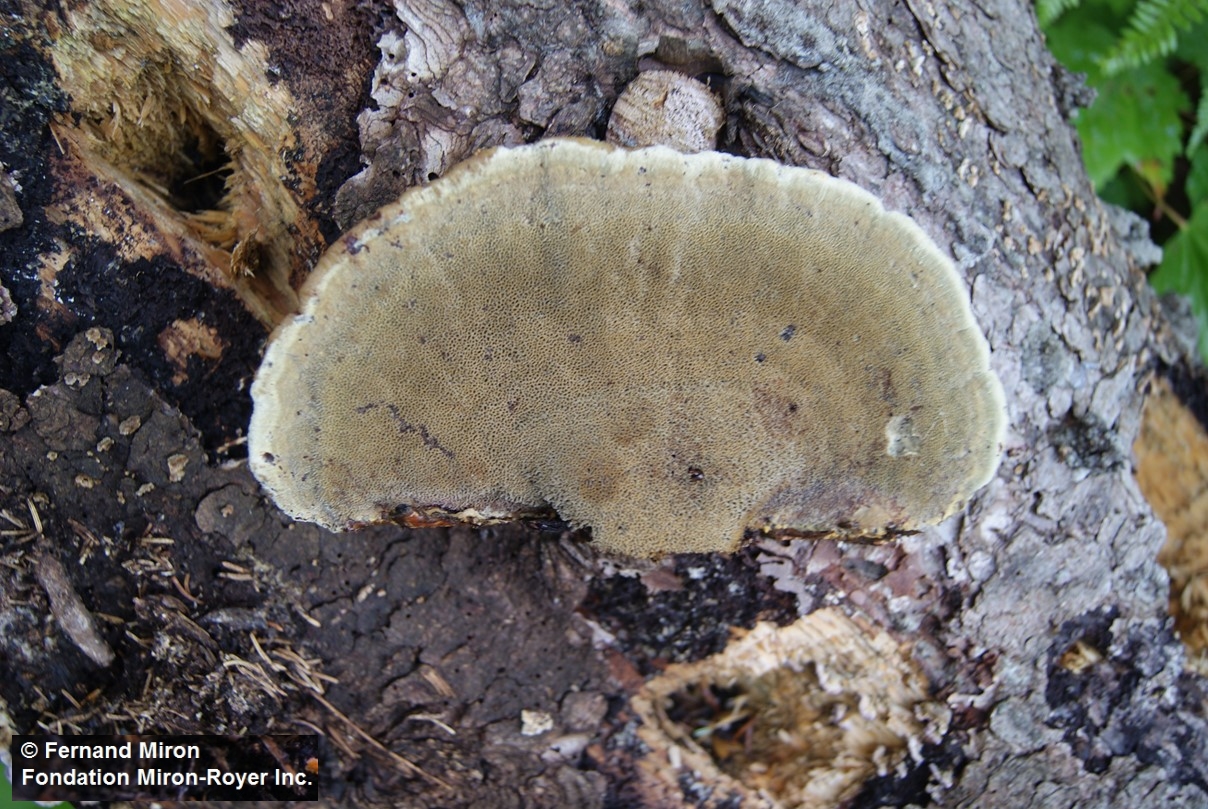
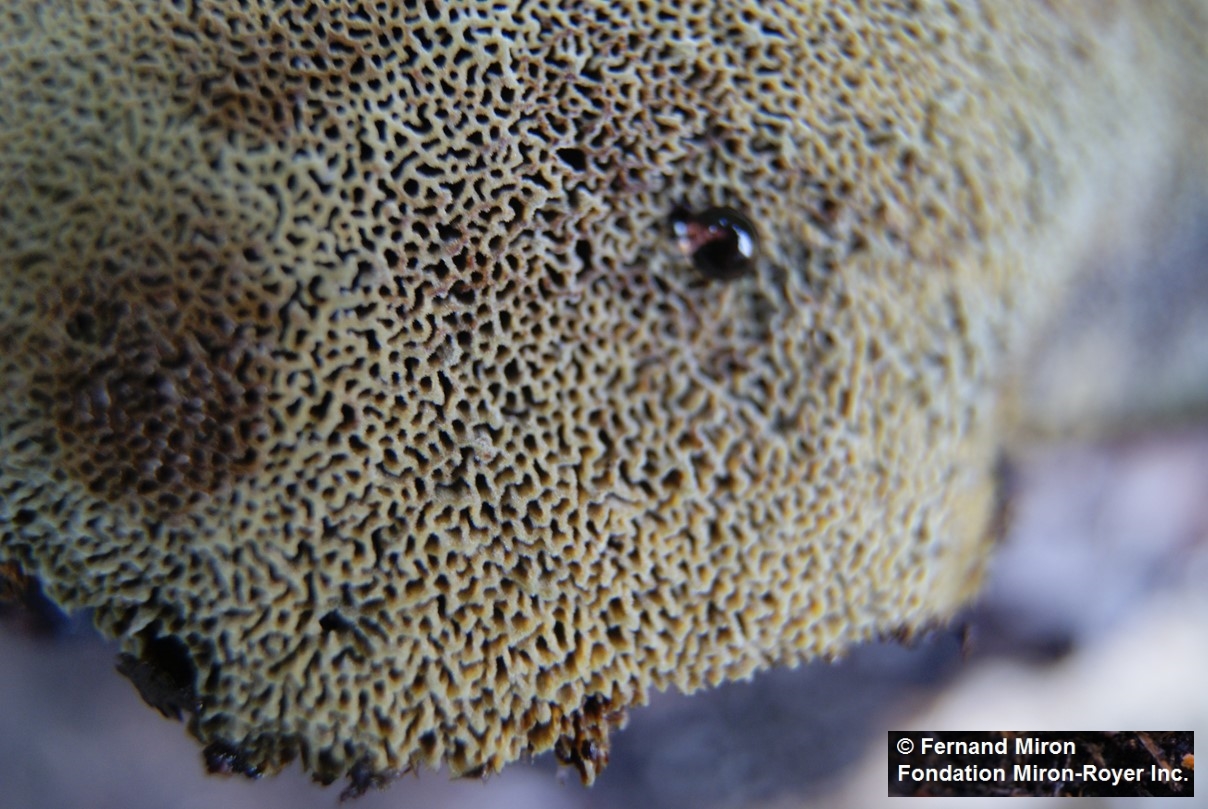
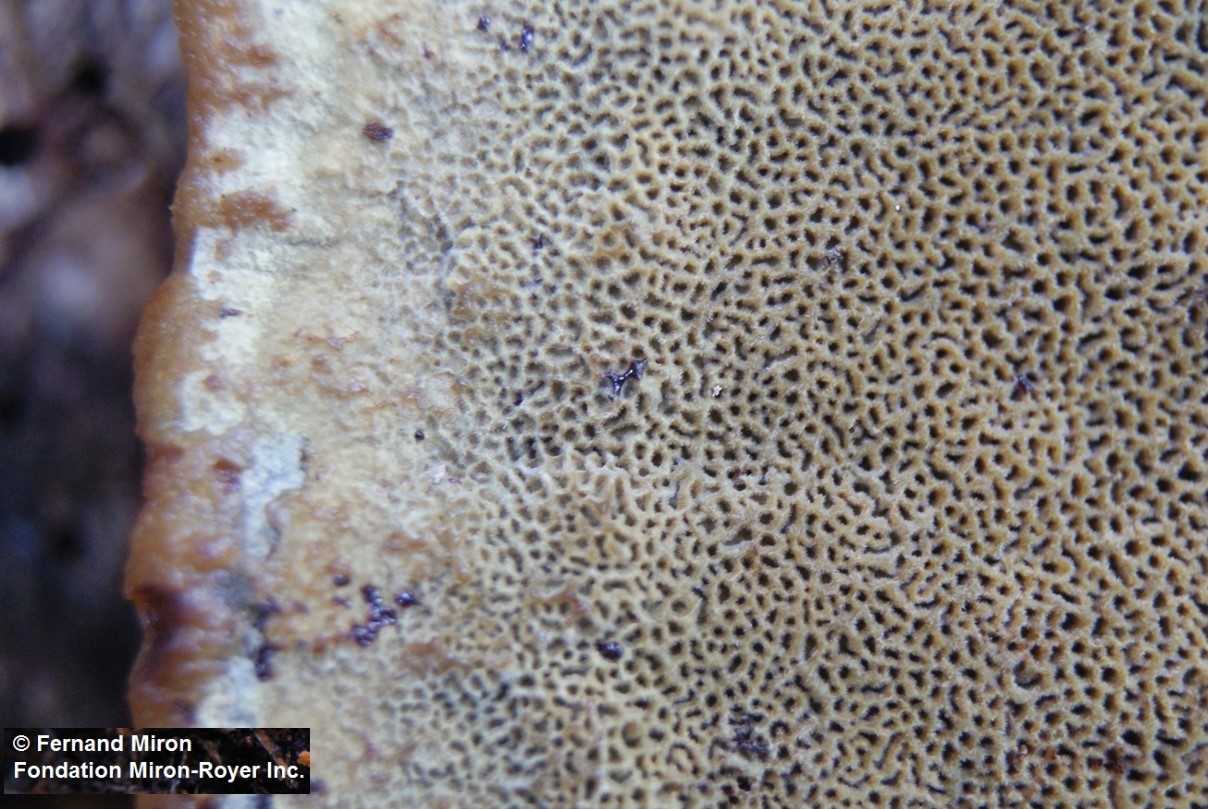
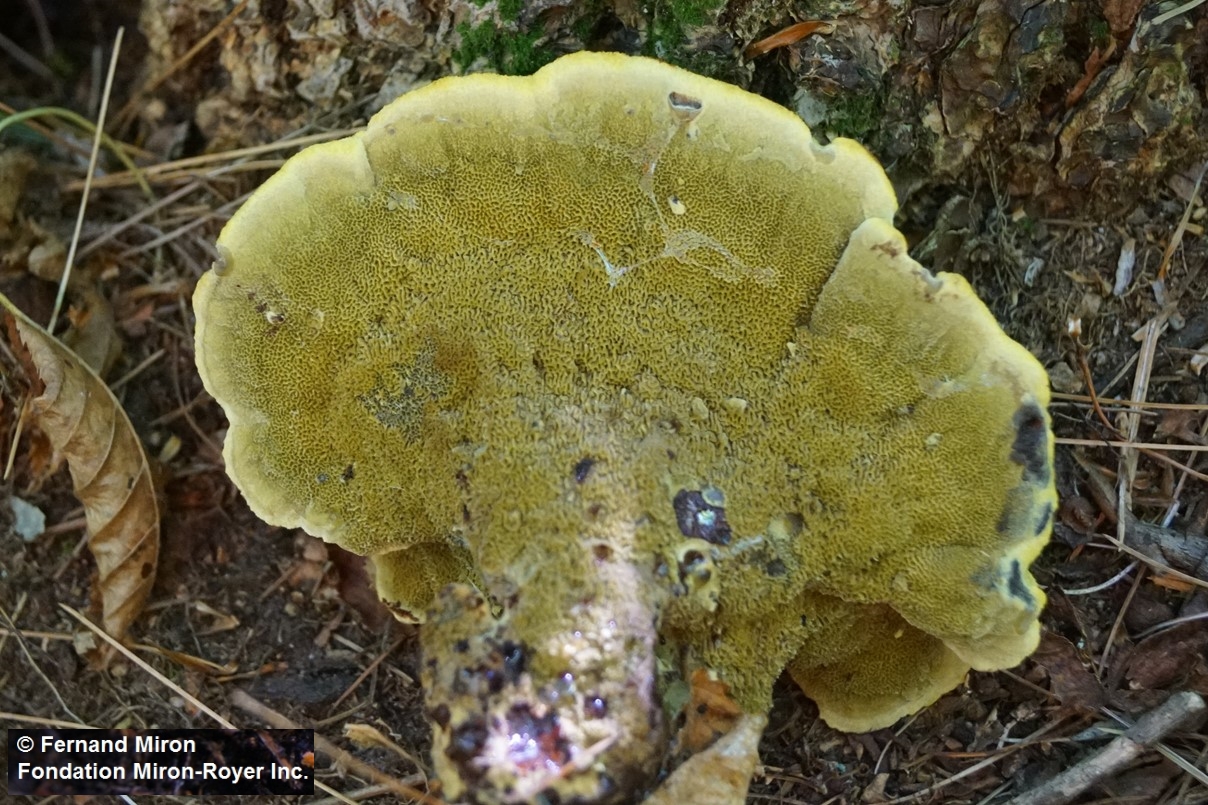
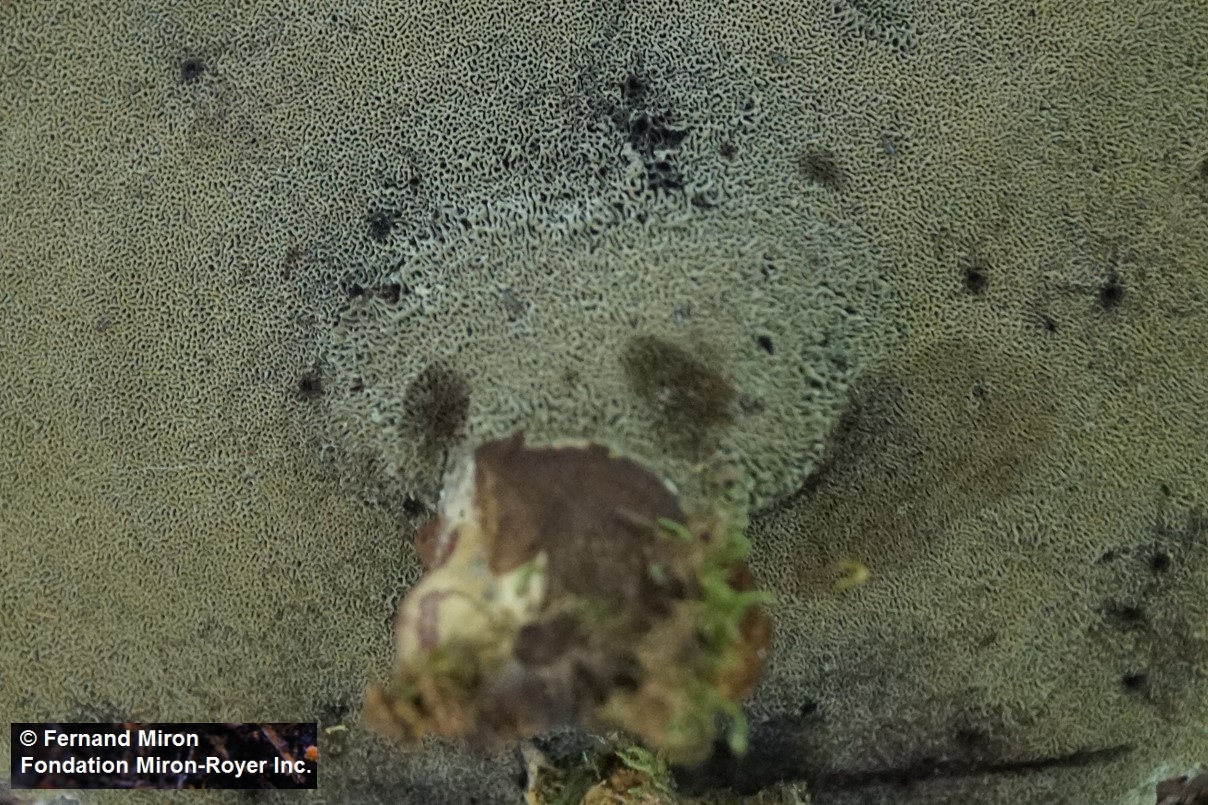
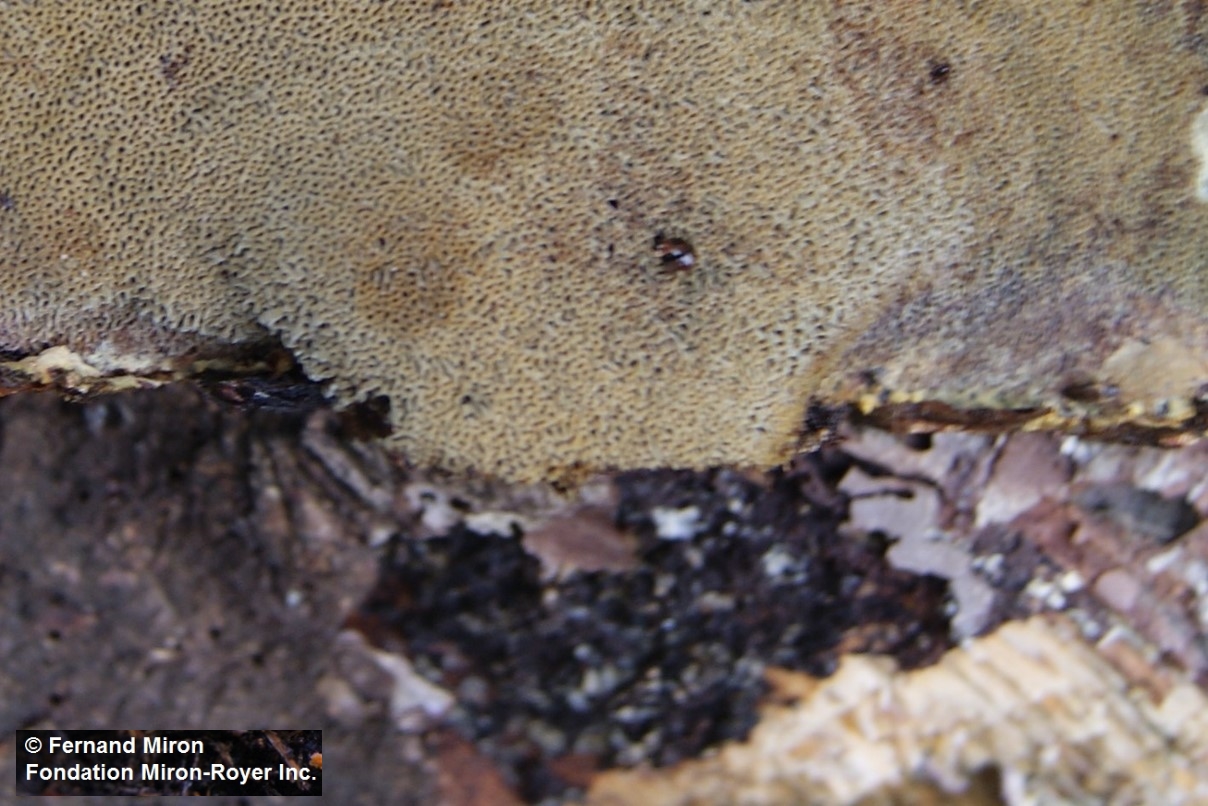
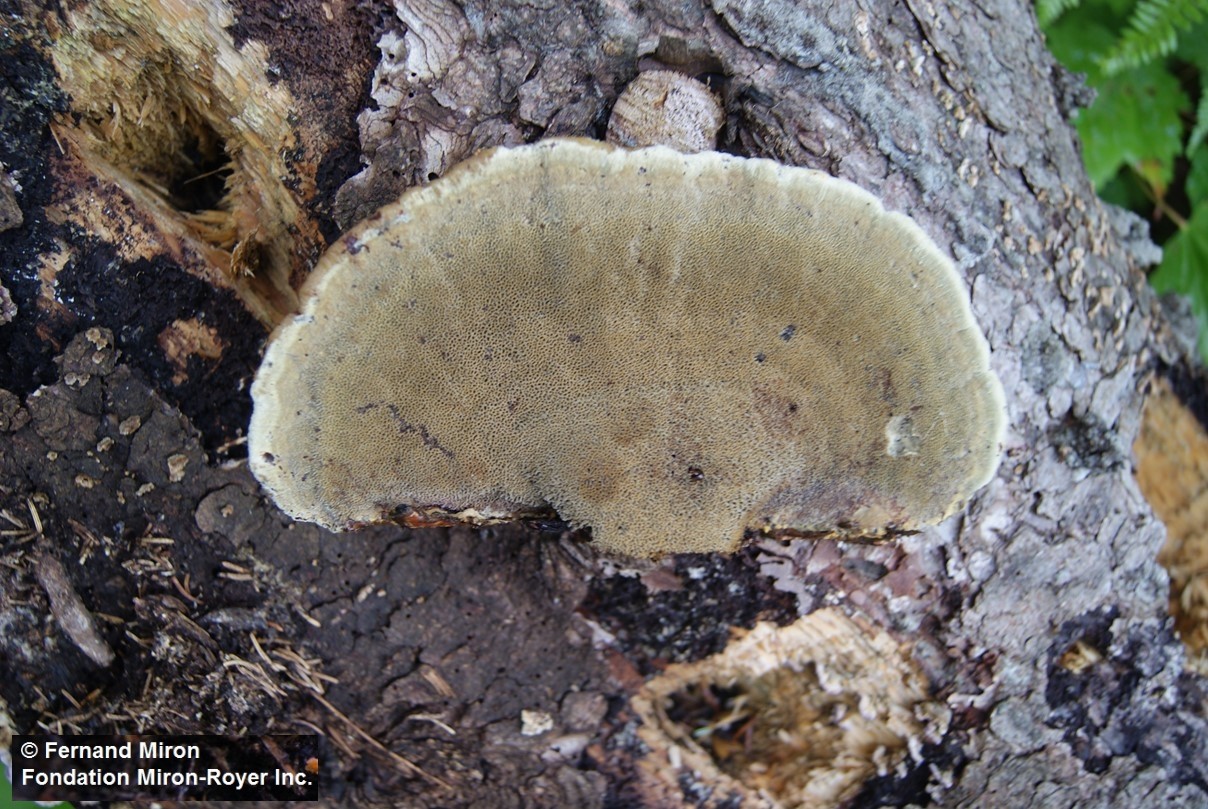
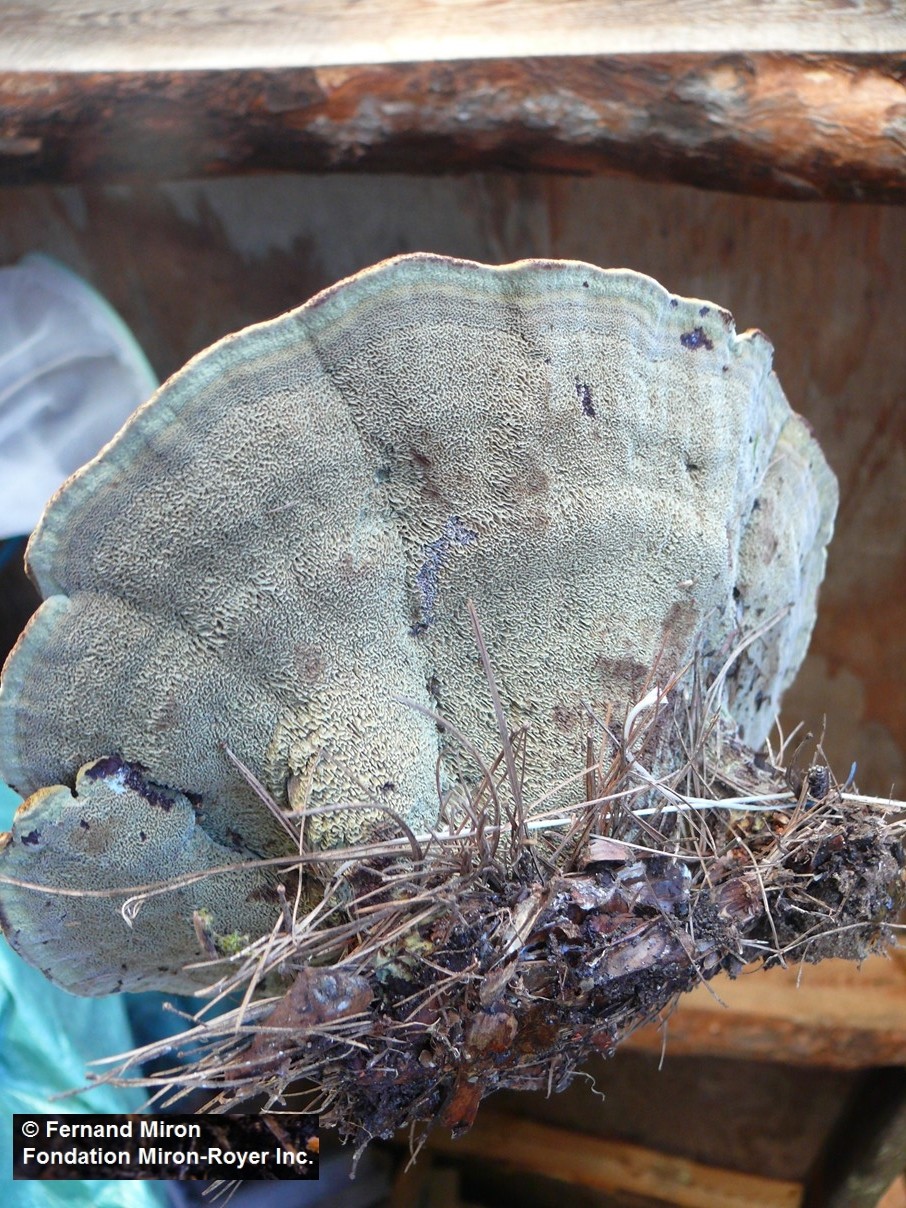
Angular, large, 1 to 2 per mm, thick-walled.
Pores and Pore Surface
Orange then greenish to rusty brown, decurrent.
Stalk
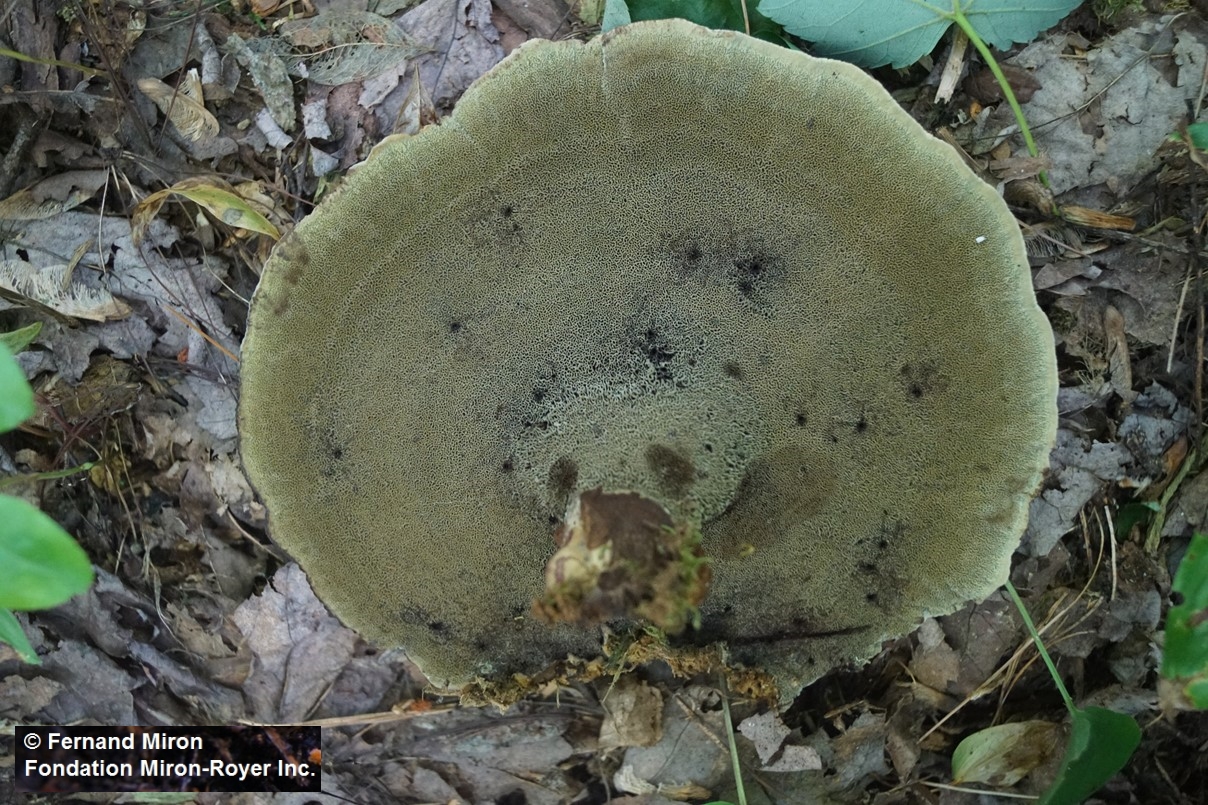
Central to the ground, short and stocky. Lateral on the trunks, very short, almost absent.
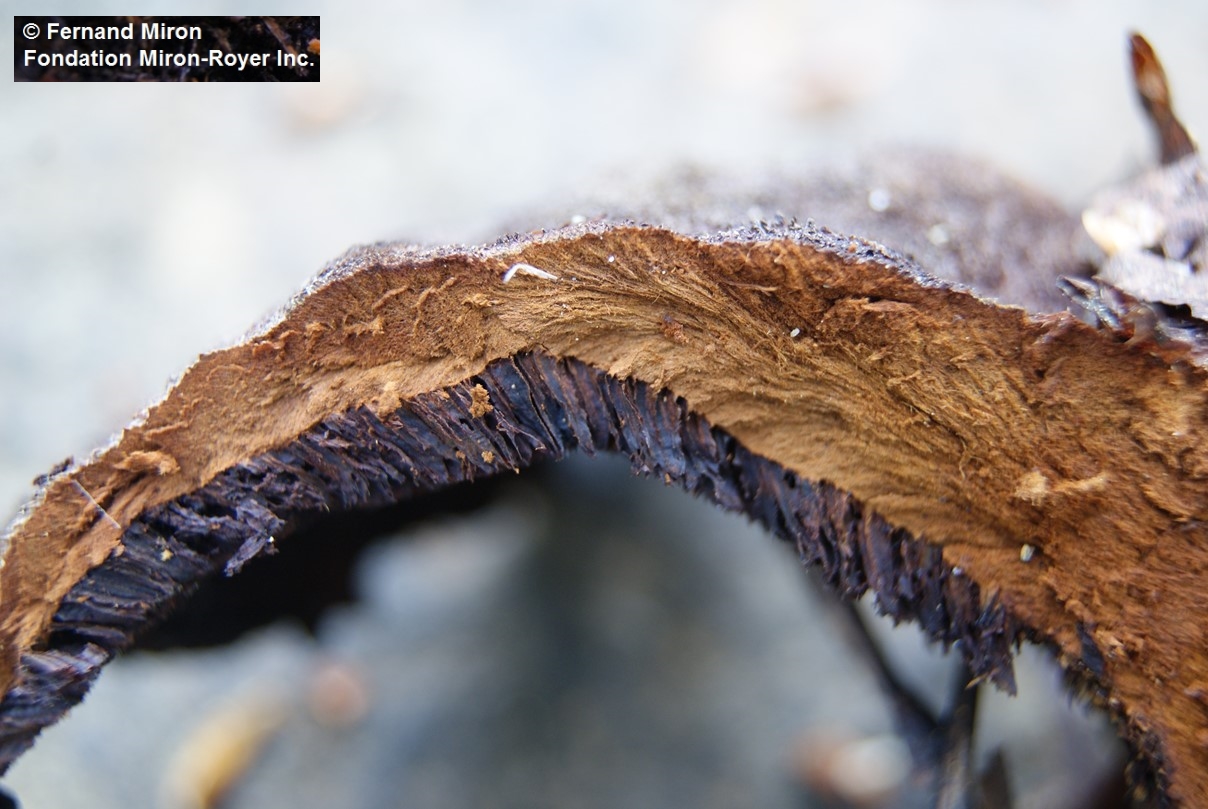
Flesh
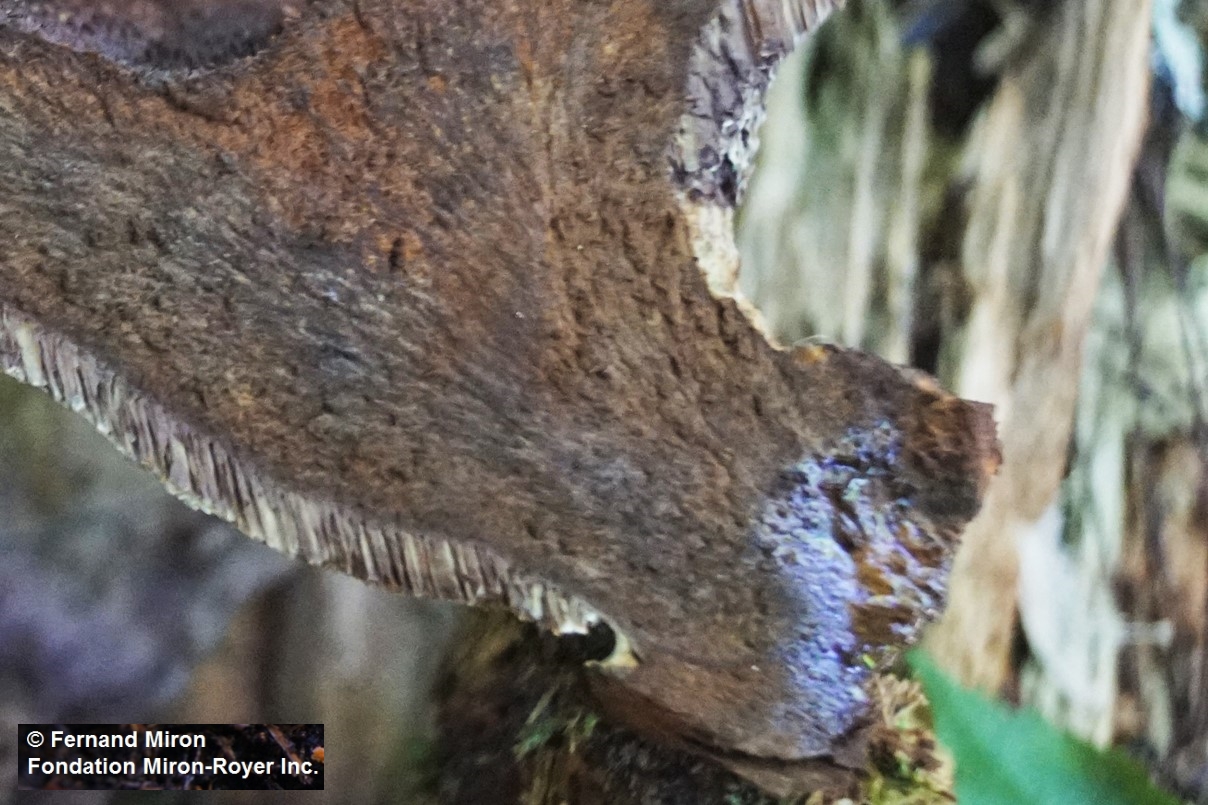
Yellowish-brown at first, dark rust with age, soft, fibrous, unzoned.
Mycélium basal
Brown.
Comments
Send a comment
Their fruiting bodies are sought after for the colouring of the fibres; they give beautiful yellow to brown colours.
The Lignicolous Bolete parasitizes its mycelium; this bolete bears fruit at the end of July or the beginning of August.
More photos
For more informations
Formation
For those who wish to improve their knowledge, register for the Foundation's training program on this site and receive a certificate confirming the fruit of your efforts..